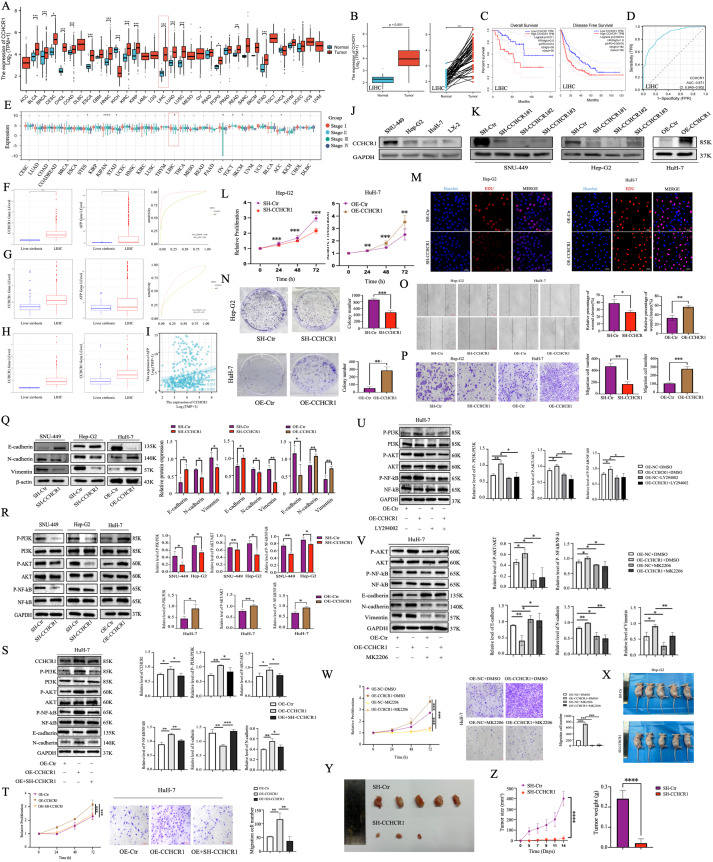
Integrative pan-cancer analysis identifies CCHCR1 as a prognostic biomarker and therapeutic target driving EMT in hepatocellular carcinoma via PI3K/AKT activation
Integrative pan-cancer analysis identifies CCHCR1 as a prognostic biomarker and therapeutic target driving EMT in hepatocellular carcinoma via PI3K/AKT activation
The development and progression of cancer involve complex interactions among multiple signaling pathways and molecular mechanisms.1 The identification and characterization of novel biomarkers with broad clinical utility are essential for elucidating cancer mechanisms. Coiled-coil α-helical rod protein 1 (CCHCR1), identified as a centrosome-associated molecule localized to P-bodies and centrosomes, has been found to be involved in cytoskeletal organization, cell proliferation, and differentiation.2,3 Recent studies suggest its potential oncogenic role in certain cancers; however, its function across a broad range of malignancies and the underlying molecular mechanisms have not been fully characterized. In this study, we conducted an integrated analysis of CCHCR1 in pan-cancers and thoroughly investigated its oncogenic mechanisms both in vitro and in vivo.