Molecular characterization of a new R1925X point mutation mouse model for dysferlinopathy
Molecular characterization of a new R1925X point mutation mouse model for dysferlinopathy
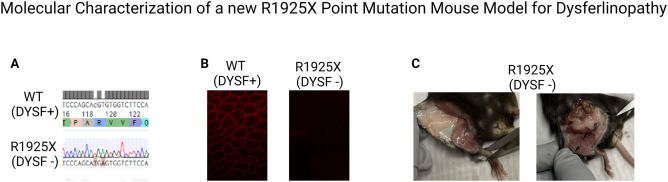
Dysferlinopathy affects between one person in 14 000 to one in two million.1 It is caused by mutations in the DYSF gene, a 55-exon gene on chromosome 2p13.2 Dysferlin is a 237 kDa membrane protein, which plays a role in stabilizing Ca2+ signalization and repairing the sarcolemma in skeletal muscles.3 Mutations in the DYSF gene cause a progressive muscle-wasting disease called dysferlinopathy. This disease has no approved treatment yet and induces progressive skeletal muscle atrophy. The age of onset is 20 ± 5 years, and patients notice weakness and atrophy in the calf or thigh, which evolves to include the upper limbs.4 The typical signs and symptoms are muscle wasting (27%), pain, stiffness, or cramps (13%), or pseudohypertrophy (6%), and elevated blood creatine kinase (CK) levels.4 The patients, therefore, need to walk with a cane in their thirties and become wheelchair bound in their fourth decade of life. Among the affected patients, several have point mutations (nonsense or missense). Therefore, having a mouse model with a point mutation is pertinent for developing a therapy to correct mutations (see Fig. 1).