Data-driven identification of core tumor-secreted factors associated with cachexia prevalence
Data-driven identification of core tumor-secreted factors associated with cachexia prevalence
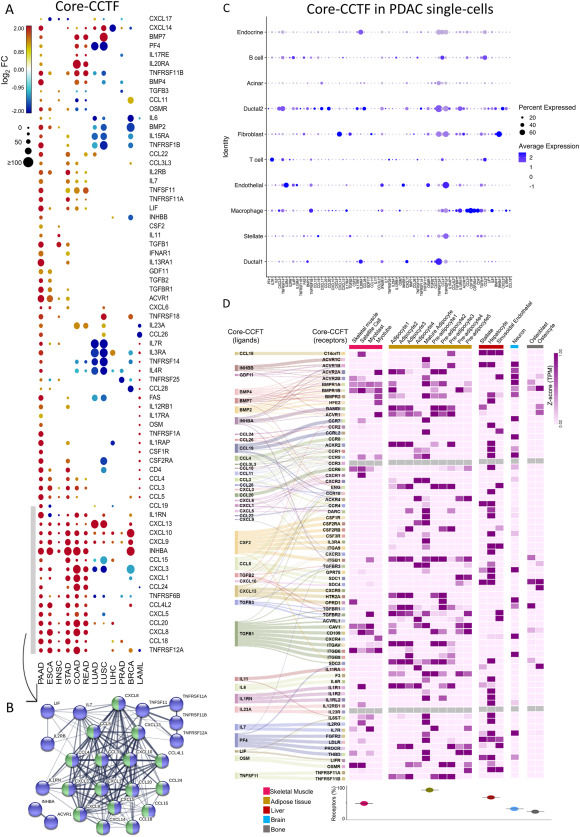
Secreted components from the tumor microenvironment actively drive the development and progression of cancer cachexia. These cancer cachexia tumor factors (CCTFs) trigger systemic inflammation, metabolic alterations, skeletal muscle wasting, and adipose tissue lipolysis. Many of these factors are members of the cytokine–cytokine receptor interaction (CCRI) pathway, which is particularly enriched in tumor types highly associated with cachexia. For example, pancreatic ductal adenocarcinoma (PDAC) has the highest prevalence of cachexia and exhibits the highest number of overexpressed secreted genes. Our previous pan-cancer study demonstrated that secretory genes (tumor secretome) belonging to the CCRI pathway are up-regulated in tumors highly associated with cachexia.1 PDAC expressed the highest number of secreted genes from the CCRI pathway. Considering the potential of this pathway to have other CCTFs not previously associated with cachexia, it is crucial to determine a core of genes representative of the pathway in the context of cancer cachexia. Moreover, we expect to distinguish the primary source of CCTF by analyzing tumor transcriptomes (bulk and single-cell). Therefore, we aimed to investigate the secretome genes related to the CCRI pathway in 12 cancer types with different prevalences of cachexia, thereby generating what we called the core of cancer cachexia tumor factors (core-CCTF).