Machine learning-based stratification of Parkinson’s disease progression using dysautonomia symptoms and transcriptomic signatures
Machine learning-based stratification of Parkinson’s disease progression using dysautonomia symptoms and transcriptomic signatures
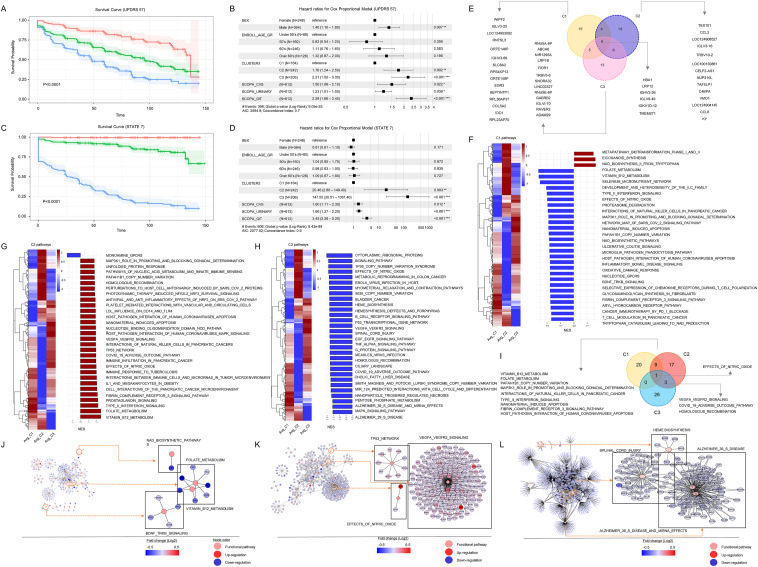
Although autonomic dysfunction (AutD) is a prognostic factor for Parkinson’s disease (PD), little is known regarding AutD progression-based stratification and its association with transcriptomic signatures. We examined the association between gene expression levels and risk factors according to the disease progression rate based on longitudinal changes of AutD severity in individual patients with PD. In total, 612 patients with PD with available SCales for Outcomes in Parkinson’s disease-autonomic (SCOPA-AUT) data from the Parkinson Progression Marker Initiative (PPMI) were included. A personalized hidden Markov model (HMM) was used to define the disease STATEs based on SCOPA-AUT scores. K-means clustering revealed three clusters reflecting STATE transition, with clusters 1 to 3 indicating rapid progression. Cox proportional hazard models showed that cluster 3 and gastrointestinal tract (GIT) symptoms in AutD significantly increased the risk for moderate stage PD. Furthermore, differential expression analyses revealed cluster-specific genes and molecular mechanisms associated with PD pathogenesis and GIT symptoms. Candidate molecular targets related to GIT symptoms were associated with rapid progression in patients with PD, suggesting that GIT-associated molecular targets could be used to stratify patients with PD showing different progression rates and thus facilitate personalized treatment strategies.