Identification of the homozygous truncating mutation in CNTD1 as a novel genetic cause of diminished ovarian reserve
Identification of the homozygous truncating mutation in CNTD1 as a novel genetic cause of diminished ovarian reserve
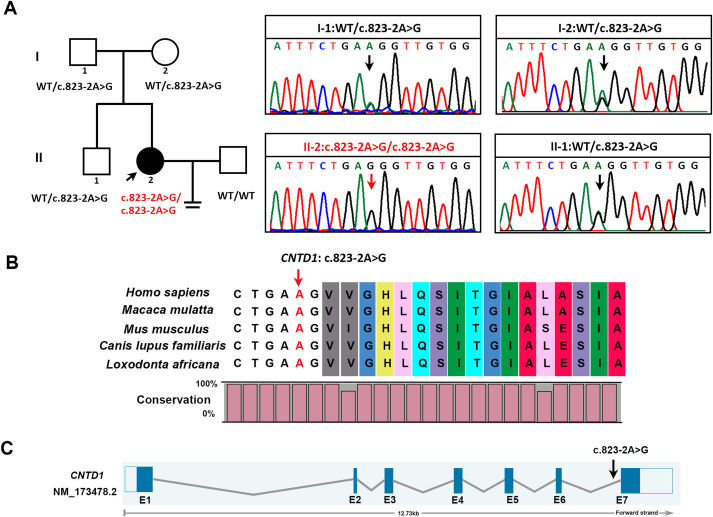
Diminished ovarian reserve (DOR) is one of the leading causes of infertility, which accounts for approximately 10% of women seeking fertility treatment. However, their genetic etiology and pathogenesis are largely unknown. Recently, cyclin N-terminal domain containing 1 (CNTD1) was reported to be critical for meiosis in female mice. However, no CNTD1 mutation has been reported to be associated with reproductive diseases in humans. Here, we firstly identified CNTD1 mutation in a DOR patient. The homozygous CNTD1 splicing mutation (NM_173478.3: c.823-2A > G) was identified in a DOR patient by whole-exome sequencing. The pathogenic effect of the identified CNTD1 splicing mutation was investigated by sequencing the transcript from the patient's primary leukocytes and minigene assay. A CRISPR/Cas9-mediated Cntd1 knockout mouse line was generated to investigate its role in ovarian function. The pathogenic mechanism of the identified CNTD1 mutation was further verified by functional studies. As a result, minigene assay and direct transcript sequencing from the patient revealed that this splicing mutation induced aberrant exon skipping. The homozygous truncating mutation in CNTD1 result in the production of a C-terminally truncated protein that cannot interact with its essential meiosis partner of proline-rich protein 19 (PRR19). Cntd1 knockout mice were characterized by dramatically reduced size of ovaries and prematurely depleted follicular pools, which indicated its role in female fertility. In conclusion, this study is the first to identify CNTD1 as a novel genetic cause for DOR patients and suggests the essential role of CNTD1 in human reproduction.