IRP1/ARID3A complex promotes pancreatic cancer chemoresistance by suppressing CYGB-related ferroptosis
IRP1/ARID3A complex promotes pancreatic cancer chemoresistance by suppressing CYGB-related ferroptosis
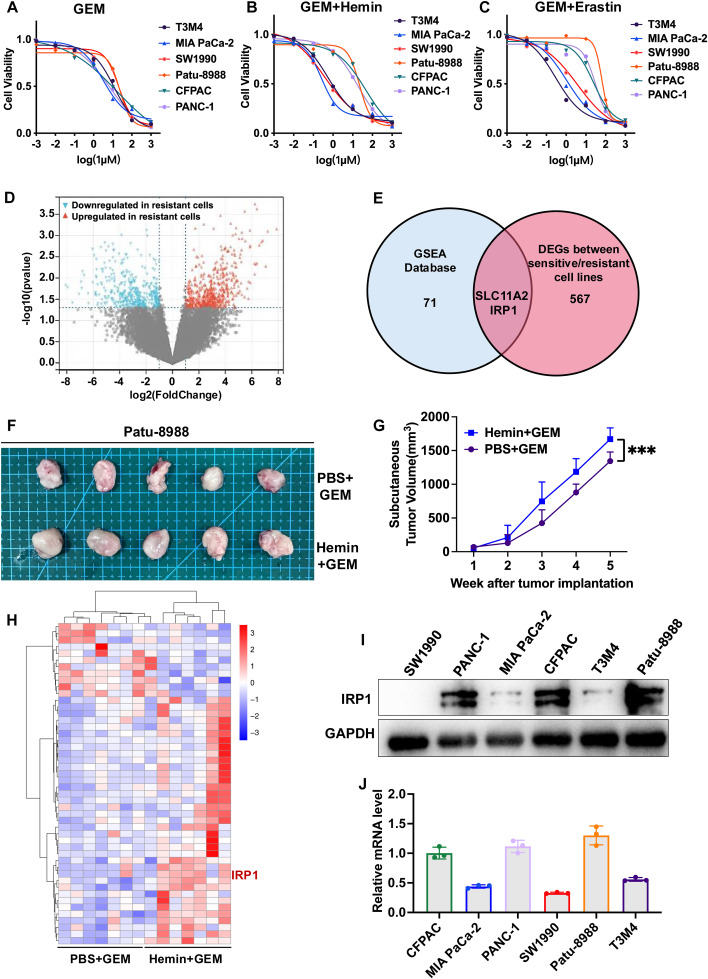
Ferroptosis, a unique modality of regulated cell death, has become an emerging strategy for tumor therapy. Multiple cellular pathways, including redox homeostasis, iron handling, epigenetic regulation, and metabolic changes, could mediate ferroptosis. Here, we demonstrate that high expression of iron-responsive element binding protein (IRP1)/A + T rich interaction domain protein 3a (ARID3A) inhibits ferroptosis and enhances chemoresistance of pancreatic cancer cells via handling the promoter region of a ferroptosis gene, cytoglobin (CYGB). Mechanistically, the high level of iron leads to nuclear translocation of IRP1 and ARID3A, thereby mediating ARID3A binding to the promoter region of CYGB and down-regulation of chromatin accessibility. The decrease of CYGB expression results in pancreatic cancer cell resistance to ferroptosis, which makes them more resistant to chemotherapy. Clinically, high expression of IRP1 and ARID3A associates with unsatisfactory chemotherapeutic response and poor survival of patients with pancreatic cancer. Our study highlights the role of IRP1/ARID3A complex as a chemotherapy target and its potential in the combined application of ferroptosis drugs