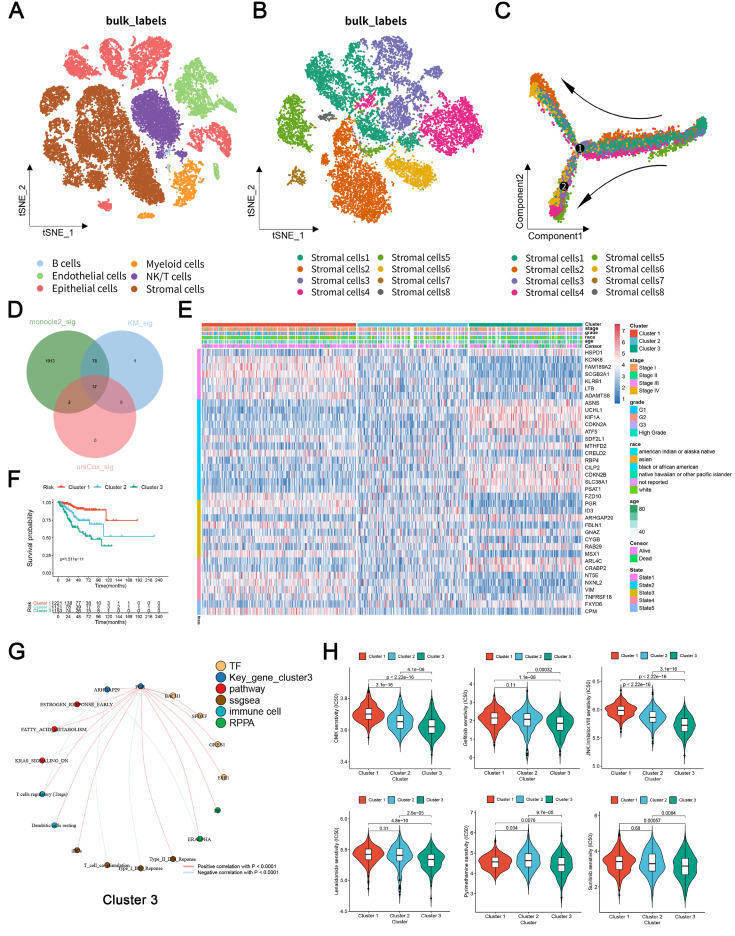
Uncovering stromal cell fate genes and a novel risk stratification in UCEC by integrating single-cell RNA sequencing and multi-omics analysis
Uncovering stromal cell fate genes and a novel risk stratification in UCEC by integrating single-cell RNA sequencing and multi-omics analysis
Endometrial cancer, one of the most prevalent gynecological malignancies, has been steadily increasing in incidence, with 417,000 new cases and 97,000 deaths reported worldwide in 2020.1 Its classification is crucial for effective management. Endometrial cancer is a highly heterogeneous tumor, exhibiting significant variation in clinical outcomes even within defined grades and tissue types.2 An evaluation of the five leading risk stratification systems for endometrial cancer revealed that none achieved high accuracy in predicting recurrence or metastasis, resulting in substantial treatment variations for the same patient based on differing criteria.3 Stromal stem cells were regarded as one of the primary contributors to the origin of endometrial cancer.4 These cells could initiate a vicious cycle of tumor development through extensive crosstalk with tumor cells, suggesting that tumor progression may significantly depend on alterations in cancer-associated stromal cell signaling.5 However, no attempt has been made to integrate stromal cells into the prognostic prediction model for uterine corpus endometrioid cancer (UCEC) to improve accuracy. In this study, we successfully identified stromal cell differentiation fate genes (SDFGs) and developed a novel UCEC risk stratification system based on these genes.