Bmp9 modulates cell proliferation and intercellular junctions in HERS during tooth root development
Bmp9 modulates cell proliferation and intercellular junctions in HERS during tooth root development
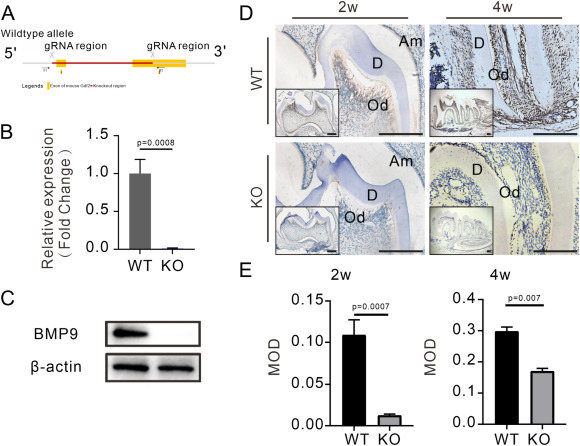
Tooth formation is a highly orchestrated process that precisely regulates the size and shape of the tooth. During typical tooth development, Hertwig's epithelial root sheath (HERS) interacts with mesenchymal cells to direct the elongation of the tooth root and the deposition of dentin and cementum, thereby contributing to the formation of a fully developed tooth root. BMP9, a member of the BMP family, plays a significant role in growth, development, and cell differentiation. However, the precise function of BMP9 in dental root development remains unclear, particularly regarding its influence on HERS and odontoblasts. In this study, we utilized a mouse molar model to investigate the role of BMP9 signaling in tooth root development. The tooth formation of Bmp9 knockout (Bmp9-KO) mice and wild-type (WT) littermates was compared. Our findings revealed that Bmp9-KO mice exhibited shorter mandibular first molar roots, wider apical foramina, and thinner dentin compared with WT mice by micro-CT and hematoxylin-eosin staining analysis. Additionally, the results of immunohistochemistry and quantitative PCR indicated that in the absence of Bmp9, odontoblast differentiation and secretory function were compromised. Furthermore, Bmp9 ablation resulted in reduced cell proliferation and increased intercellular junctions within HERS, subsequently impacting root dentin formation and apical foramen closure. This study offers new insights into the regulatory role of BMP9 signaling in odontoblast and HERS function, highlighting its significance in root development and providing potential avenues for future research in tooth root regeneration.