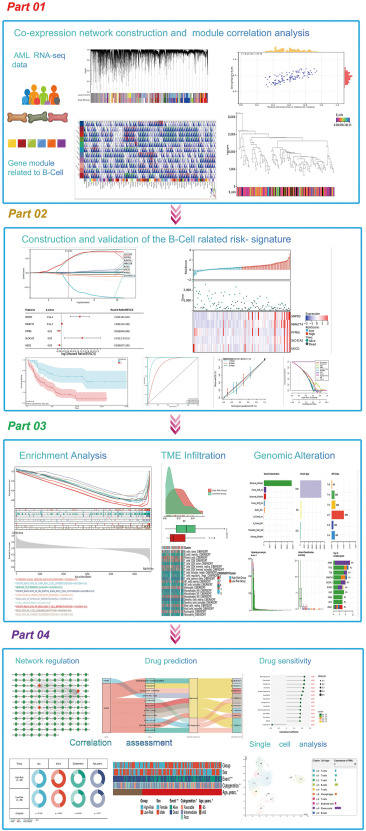
Bioinformatic validation and machine learning based exploration of B cells-related gene signatures in the context of strategies for precision therapy to acute myeloid leukemia
Bioinformatic validation and machine learning based exploration of B cells-related gene signatures in the context of strategies for precision therapy to acute myeloid leukemia
Acute myeloid leukemia (AML) is a ubiquitous hematological cancer that originates from uncontrolled proliferation of bone marrow cells and presents distinct features in the population. Despite advances in chemotherapy and hematopoietic stem cell transplantation, AML remains a major challenge in improving patient survival. B cells play an important role in the immune monitoring, tumor microenvironment and therapeutic response of AML. In one aspect, AML cells can evade immune surveillance by a variety of mechanisms, including altering the expression of surface antigens, secreting immunosuppressive factors, or inducing the activity of immunosuppressive cells, which can recognize abnormal cell motility immune surveillance by impeding the production of antibodies. On the other hand, B cells and cytokines produced by them may play a supportive role in the pathogenesis and progression of AML. Accordingly, the functions of B cells and other immune cells of AML patients may be suppressed and thus may not be effective against AML cells. Therefore, this study aims to comprehensively explore the pathogenesis of B-cell-related genes in AML patients, explore the relationship between clinical outcomes of AML patients and tumor immune microenvironment characteristics, and provide ideas for precise treatment of AML patients.