A comprehensive proteomic analysis uncovers novel molecular subtypes of gastric signet ring cell carcinoma: Identification of potential prognostic biomarkers and therapeutic targets
A comprehensive proteomic analysis uncovers novel molecular subtypes of gastric signet ring cell carcinoma: Identification of potential prognostic biomarkers and therapeutic targets
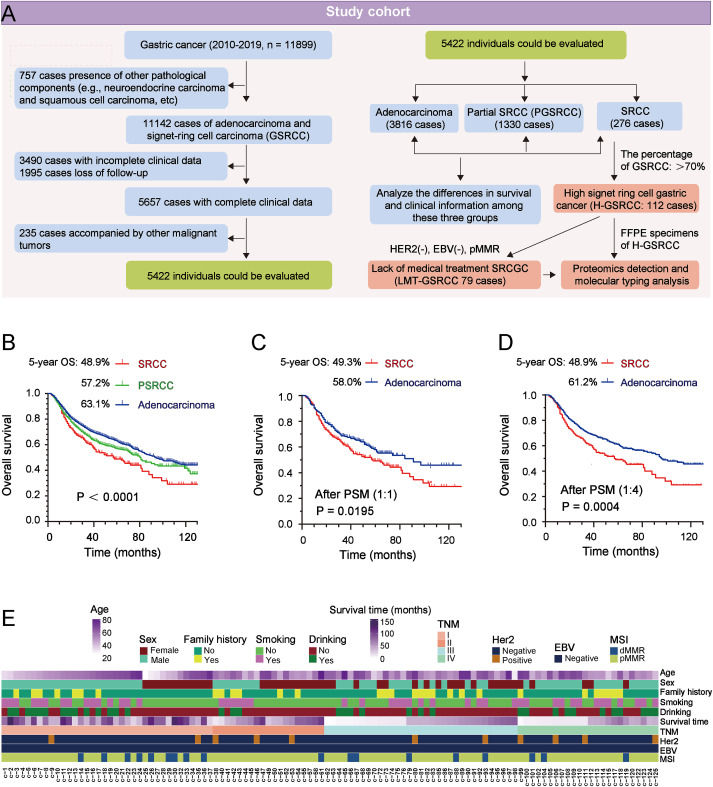
Gastric signet ring cell carcinoma (GSRCC) is a distinct subtype of gastric cancer with unique epidemiological and pathogenic characteristics. However, its prognostic features and molecular landscape remain poorly understood, limiting the development of targeted therapies. In this study, we analyzed clinical data from over 10,000 patients with gastric cancer treated at Zhejiang Cancer Hospital between January 2010 and December 2019. A comprehensive proteomic analysis was conducted on 112 GSRCC patients with a signet ring cell content exceeding 70%, identifying 7322 proteins. This study established a tissue-specific peptide spectral library, representing the most extensive proteomic atlas of GSRCC to date. We identified four novel proteomic subtypes: metabolism, microenvironment dysregulation, migration, and proliferation. Furthermore, PRDX2 and DDX27 emerged as potential prognostic biomarkers, which were further validated in an independent cohort of 75 patients. Molecular profiling of 79 cases that lacked expression of established gastric cancer treatment targets and biomarkers revealed significant tumor heterogeneity. Unsupervised clustering identified three distinct proteomic clusters, with cluster 2 exhibiting the poorest prognosis. Additionally, we identified four potential drug targets, including PFAS, EIF2S3, EIF6, and NFKB2. Molecular docking analysis suggested that neratinib, a clinically approved drug, could serve as a promising therapeutic agent for GSRCC, offering new avenues for clinical intervention.