miR-27a expression during inflammatory organ injury associated with ARDS and a novel tissue-specific knockout model
miR-27a expression during inflammatory organ injury associated with ARDS and a novel tissue-specific knockout model
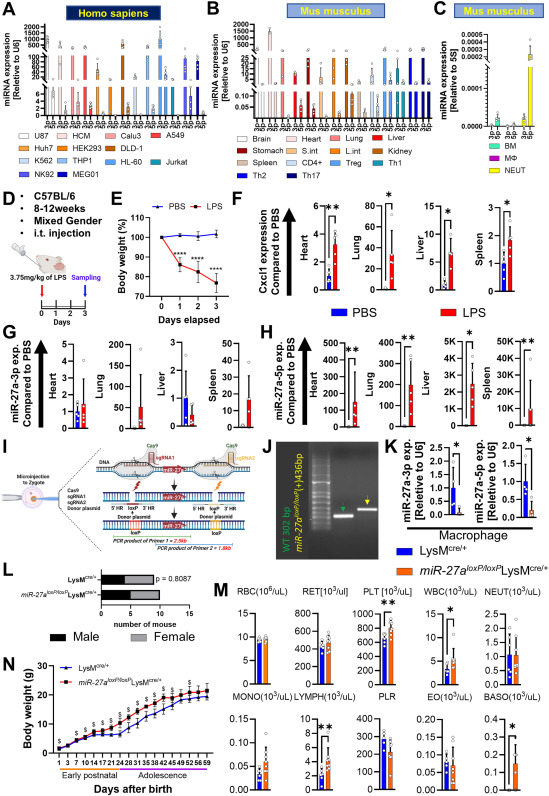
Acute respiratory distress syndrome (ARDS) is a life-threatening condition with high morbidity and mortality, particularly in patients requiring surgery or intensive care.1 A hallmark of ARDS is acute pulmonary inflammation that progresses to systemic inflammation. MicroRNAs (miRNAs) are integral regulators of gene expression, and their dysregulation in immune cells is intricately linked to inflammatory responses.2,3 Among them, miR-27a has garnered attention for roles in oncogenesis, chemoresistance, and inflammation.4 However, their expression pattern across different tissues and immune cell populations during ARDS-associated organ injury remains underexplored, and genetic tools to study their function in vivo are lacking. Here, we profiled miR-27a-3p and miR-27a-5p and demonstrated that miR-27a-3p had higher expression than miR-27a-5p in most organs. However, this ratio was reversed in myeloid-derived cells, where miR-27a-5p was particularly enriched. We further examined their regulation during endotoxin-induced lung injury and found that miR-27a-5p is strongly induced under inflammatory stress in both pulmonary and non-pulmonary organs, suggesting a role in systemic immune regulation. To investigate its tissue-specific involvement, we generated a conditional knockout mouse line enabling myeloid-specific deletion of miR-27a. It resulted in altered hematopoiesis and elevated basal cytokine expression, underscoring the contribution of myeloid-derived miR-27a to inflammatory homeostasis.