Identification of PLXNC1 as a novel biomarker for consensus molecular subtype 4 in colorectal cancer
Identification of PLXNC1 as a novel biomarker for consensus molecular subtype 4 in colorectal cancer
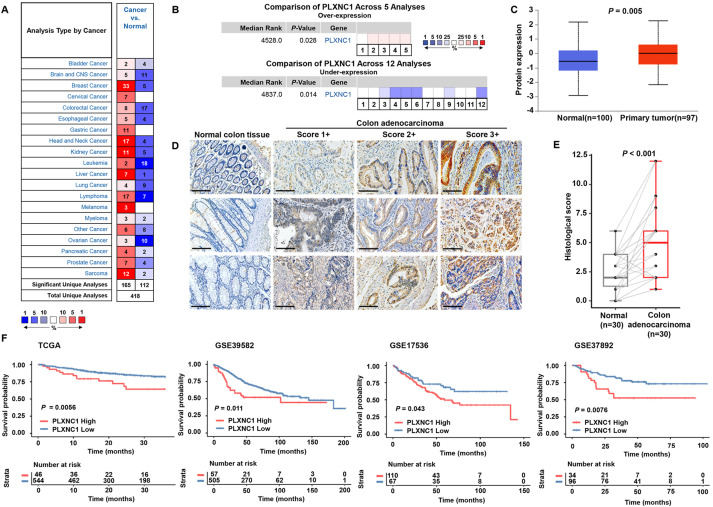
Colorectal cancer (CRC) is a highly heterogeneous malignancy that is divided into four consensus molecular subtypes (CMSs), with CMS4 considered to be the worst type of CRC. The CMS classification has not been translated into clinical practice through the transcriptomic data; thus, the identification of a novel biomarker that can identify CRC subpopulations is imperative. Using bioinformatic analysis and immunohistochemical verification, we found that PLXNC1 mRNA and protein expression were significantly up-regulated in CRC tissues. High PLXNC1 was found to be significantly associated with aggressiveness and poor prognosis and thus was confirmed as an independent prognostic factor for CRC. CMS4 CRC could be distinguished from other subtypes based on PLXNC1 expression. The tumor microenvironment was investigated by deconvolution algorithms through bulk and single-cell RNA-sequencing data. CRC with high PLXNC1 expression exhibited a distinct mesenchymal phenotype, accompanied by high infiltration of stromal components, angiogenesis, complement activation, and an immunosuppressive microenvironment. The functions of PLXNC1 were assessed by proliferation, migration, and invasion assays in CRC cells in vitro. A subcutaneous tumor model and liver metastasis model of CRC were generated to explore the effects of PLXNC1 in vivo. Combined with RNA-sequencing analysis, PLXNC1 promoted CRC growth and metastasis by regulating epithelial–mesenchymal transformation and immune escape. Knockdown of PLXNC1 reduced the CMS4-related phenotypes in CRC. In vitro co-culture and in vivo experiments revealed that PLXNC1 could impair the cytotoxicity of CD8+ T cells, thus facilitating immune evasion by CRC cells. We demonstrate that PLXNC1 may predict poor prognosis of CRC, exhibit pro-oncogenic effects, and accelerate tumor immune escape in CRC progression. Our study uncovers a novel biomarker for CMS4 CRC and suggests PLXNC1 as an indicator for prognosis and a potential drug target of high-risk CRC.