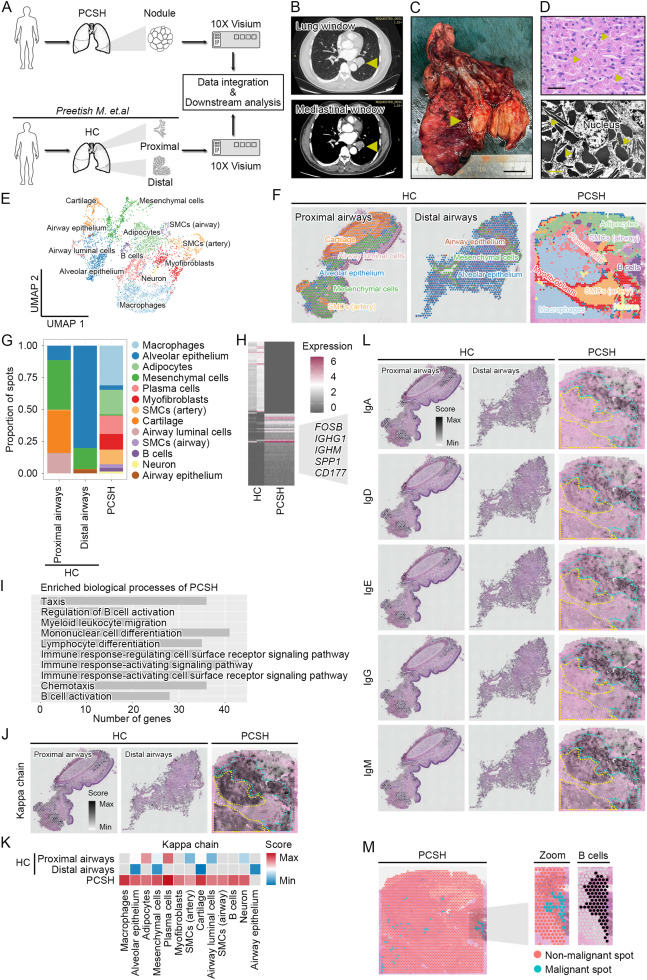
Spatial transcriptomic characterization of the pathologic niche in a patient with pulmonary crystal-storing histiocytosis
Spatial transcriptomic characterization of the pathologic niche in a patient with pulmonary crystal-storing histiocytosis
Crystal-storing histiocytosis (CSH) is a rare disease characterized by an accumulation of crystalline inclusions in the cytoplasm of histiocytes. These inclusions are derived from monoclonal immunoglobulin (Ig) deposition.1 The most frequently affected organs are the bone marrow and kidney; the lung is also an affected organ due to an imaging feature identical to that of lung cancer. CSH is usually an indirect sign of malignant diseases. As a result, most patients are concurrently diagnosed with neoplastic diseases such as multiple myeloma.2 Therefore, more in-depth investigations are urgently required to clarify the underlying mechanisms of CSH. The histological characterizations of CSH have been defined; however, the cellular and molecular features of CSH remain unclear.