Single-cell transcriptomics reveals EpCAM regulates the development and morphology of intestinal epithelium via controlling the EGFR pathway
Single-cell transcriptomics reveals EpCAM regulates the development and morphology of intestinal epithelium via controlling the EGFR pathway
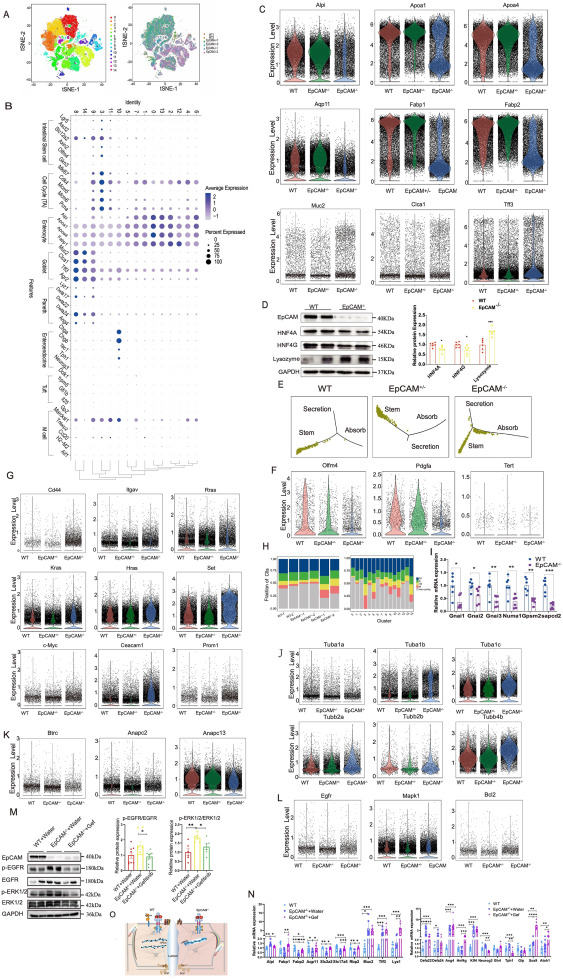
Congenital tufting enteropathy (CTE), which is a rare inherited intractable diarrhea of infancy and is characterized by intestinal epithelial cell (IEC) dysplasia and villus tufting, is mostly caused by the loss-of-function mutation of EpCAM.1 However, the mechanisms of EpCAM on regulating the development and morphology of the intestinal epithelium remain unclear. The expression level of EpCAM is higher in the crypts than the villi of small intestines,1 indicating that it plays important roles in the intestinal stem cells (ISCs). We recently found that EpCAM maintains the longevity of ISCs.2 However, the functions of EpCAM in the differentiation and division of ISCs still need to be explored. Here, we performed single-cell RNA sequencing (scRNA-seq) to compare the developmental potential of IECs from wild type (WT), EpCAM+/− and EpCAM−/− embryos at the E18.5 stage and uncovered the pathological mechanism of CTE that EpCAM deficiency might elevate the activation of EGFR in the ISCs and transit-amplifying (TA) cells to cause the tufting intestinal epithelium and the immaturity of IECs.