Two novel murine esophageal cancer cell line models exhibiting distinct sensitivities to immunotherapy
Two novel murine esophageal cancer cell line models exhibiting distinct sensitivities to immunotherapy
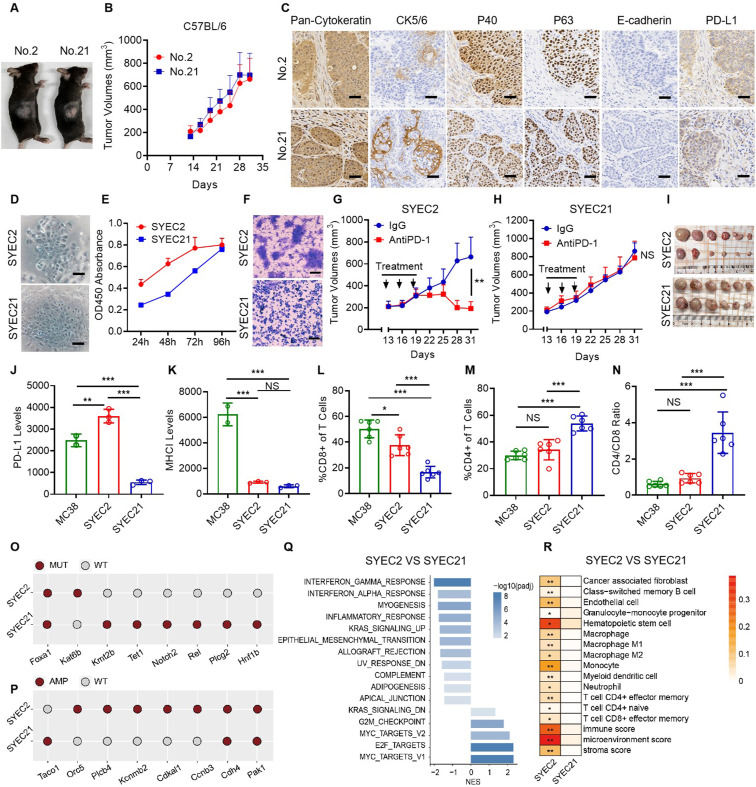
Immunotherapy has emerged as a frontline treatment for advanced esophageal squamous cell carcinoma (ESCC). Still, therapeutic resistance remains a major challenge.1 The development of robust preclinical models is critical for ESCC, as current murine-derived cell lines are limited to AKR2 and mEC25 3, which are scarce compared with human-derived counterparts. In this study, we established two primary ESCC cell lines, SYEC2 and SYEC21, derived from orthotopic tumors in C57BL/6NJ mice induced by the carcinogen 4-Nitroquinoline 1-oxide (4-NQO). Histopathological analysis confirmed their squamous cell carcinoma characteristics. Both cell lines exhibited robust proliferative and migratory capacities in vitro and demonstrated differential sensitivity to chemotherapeutic agents (5-fluorouracil, paclitaxel, cisplatin, and irinotecan). In vivo, subcutaneous injection of SYEC2 and SYEC21 can form tumors, with SYEC2 showing superior responsiveness to immunotherapy. Mechanistically, SYEC2 tumors displayed higher CD8+ T cell infiltration, lower CD4+ T cell presence, reduced major histocompatibility class I (MHC-I) expression, and elevated programmed death ligand-1 (PD-L1) levels compared with SYEC21. Whole-genome and transcriptome analyses further revealed substantial genetic heterogeneity between the two models. Collectively, we present two immunologically distinct murine ESCC models that recapitulate key features of human disease and facilitate the investigation of mechanisms underlying immunotherapy resistance.