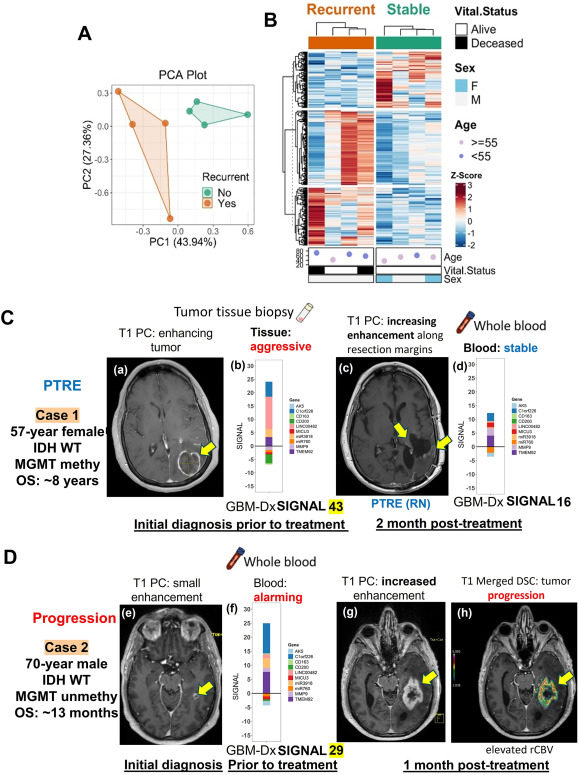
GBM-Dx SIGNAL: Blood transcriptomics complementing neuroimaging to differentiate glioblastoma recurrence from treatment effects
GBM-Dx SIGNAL: Blood transcriptomics complementing neuroimaging to differentiate glioblastoma recurrence from treatment effects
Glioblastoma (GBM), the most aggressive primary brain tumor in adults, accounts for more than half of malignant central nervous system neoplasms. Despite maximal treatment combining surgery and chemoradiotherapy, prognosis remains poor, with a median survival of approximately 14.6 months and a five-year survival rate below 7%. A major clinical challenge lies in accurately distinguishing true tumor recurrence from post-treatment-related effects (PTREs), such as radiation necrosis, pseudoprogression, inflammation, and edema. Misclassification can delay timely interventions and compromise survival, treatment efficacy, and quality of life.1,2 To our knowledge, no previous comprehensive study has integrated blood-based transcriptomic profiling with neuroimaging to address this diagnostic and research gap. This innovation aligns with the U.S. National Institutes of Health (NIH) priorities (PAR-25-175) for integrating liquid biopsy assays and imaging for precision cancer management and responds to the FY24 GBMRP Stakeholders Meeting Summary and Gaps for GBM: “Non-invasive biomarkers, liquid biopsy and imaging strategies” reported by the U.S. Department of Defense (DoD).