Ammonia-induced cell death patterns in glioblastoma: Immune landscape, prognostic signature, and therapeutic target identification
Ammonia-induced cell death patterns in glioblastoma: Immune landscape, prognostic signature, and therapeutic target identification
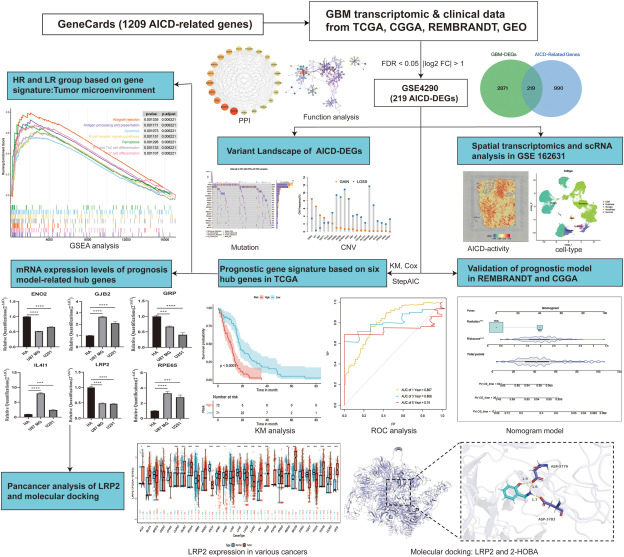
Glioblastoma (GBM) remains one of the most lethal primary brain tumors due to its metabolic reprogramming and highly immunosuppressive microenvironment.1 Ammonia, a byproduct of glutamine metabolism, induces a form of regulated cell death termed ammonia-induced cell death (AICD), which was implicated in the impairment of immune cell function, particularly the survival of effector CD8+ T cells, through metabolic reprogramming during immune activation.2,3 This pathway has emerged as a critical mechanism by which GBM evades immune surveillance, contributing to its resistance to immunotherapies.4 However, the role of AICD in GBM has not been systematically elucidated. Here, we performed an integrative analysis of bulk and single-cell transcriptomic data to characterize AICD-related gene expression and immune context in GBM. We constructed and validated a six-gene prognostic model (ENO2, GJB2, GRP, IL4I1, LRP2, and RPE65) that stratifies patients by survival and immune features. Spatial and single cell RNA sequencing (scRNA-seq) analyses revealed that AICD activity is enriched in mural cells and macrophages. Among independent prognostic AICD-DEGs, we identified LRP2 as a potential therapeutic target on the basis of its widespread expression and role in key biological processes (e.g., cell signaling, immune modulation, and tumor progression across cancers).5 Pan-cancer evaluation highlighted LRP2 as a promising immunometabolic target, and molecular docking identified 2-hydroxybenzylamine (2-HOBA) as a compound with strong binding to LRP2. Our findings provide a novel prognostic tool and identify LRP2 as a candidate therapeutic target, potentially restoring immune function in GBM. A schematic workflow is shown in Figure 1, while all supporting results and methods are detailed in Supplementary Materials.