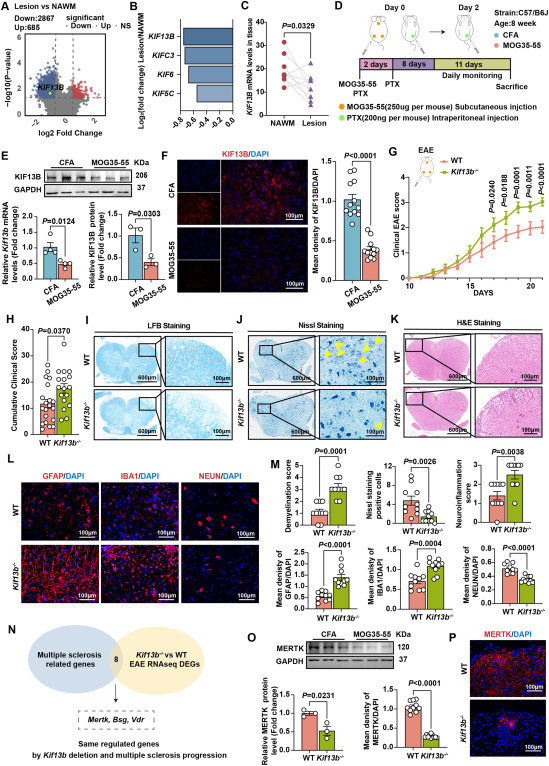
Depletion of Kif13b promotes neuroinflammatory attack against myelin in an experimental autoimmune encephalomyelitis mouse model
Depletion of Kif13b promotes neuroinflammatory attack against myelin in an experimental autoimmune encephalomyelitis mouse model
Multiple sclerosis (MS) is an inflammatory demyelinating neurodegenerative disease and the leading cause of disability in young people without any therapeutic treatment to date.1 The kinesin family is a molecular motor responsible for forward transport of mitochondria, RNA, proteins, and synaptic vesicles, mediating physiological and pathological processes, such as microtubule growth, axon development, and myelin degeneration.2 An abnormal number of kinesins during axonal transport may serve as biomarkers for neurodegenerative diseases. Recent studies have identified kinesin family member 13b (KIF13B), the largest family member, as an unconventional signal transduction regulator involved in myelin formation in the central and peripheral nervous systems.3 Nevertheless, whether KIF13B regulates the repair of myelin loss and its implication in the pathogenesis of MS has not been explored yet.