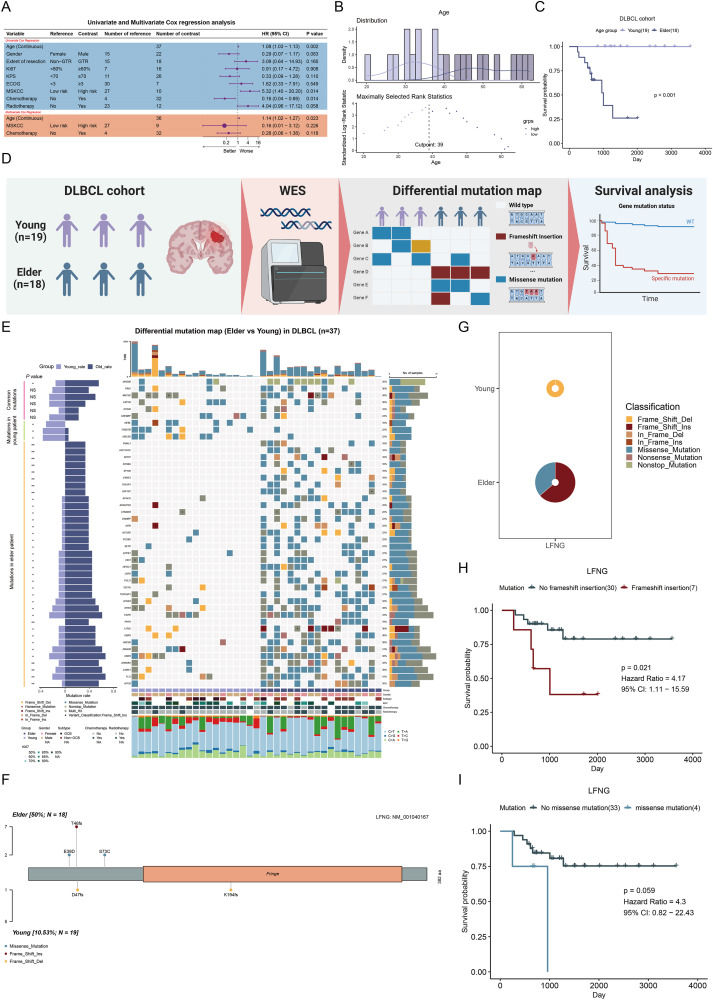
Decoding age-stratified mutational landscapes in CNS lymphoma via genomic and survival profiling for precision oncology
Decoding age-stratified mutational landscapes in CNS lymphoma via genomic and survival profiling for precision oncology
Primary central nervous system lymphoma (PCNSL), a rare extranodal non-Hodgkin lymphoma, is most commonly a diffuse large B-cell lymphoma (DLBCL). Although treated with surgery, radiotherapy, and chemotherapy, its high recurrence rate leads to an unfavorable prognosis.1 Recent advances in high-throughput molecular profiling, particularly whole-exome sequencing (WES) and genome-wide association studies (GWASs), have significantly transformed our understanding of the molecular pathogenesis of PCNSL. Recurrent somatic alterations in genes such as IGLL5, PIM1, MYD88, BTG2, PCLO, KMT2D, and BTG1 have been implicated in PCNSL oncogenesis.1,2 However, existing WES and GWAS in PCNSL have predominantly focused on older populations, leaving young patients, particularly those under 40 years of age, markedly under-represented. This data gap has created a critical barrier to understanding the full spectrum of molecular heterogeneity across age groups.