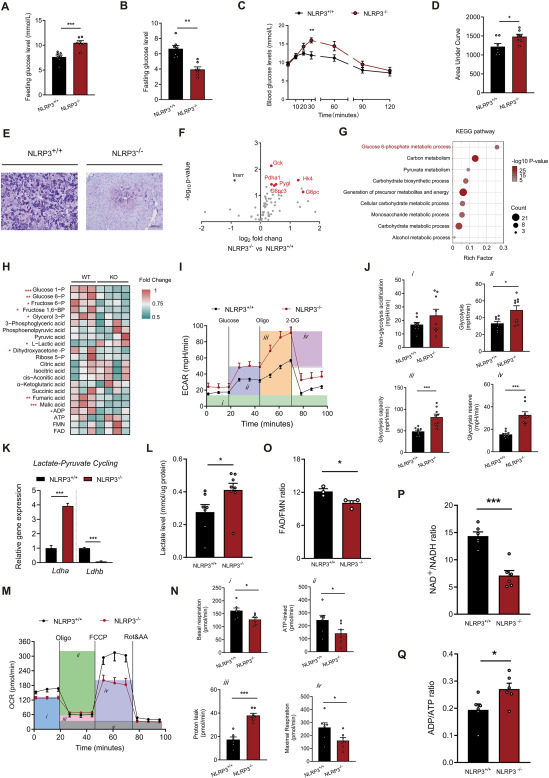
NLRP3 deficiency reprograms hepatic glucose metabolism but fails to ameliorate hepatic inflammation and fibrosis in the MCD model
NLRP3 deficiency reprograms hepatic glucose metabolism but fails to ameliorate hepatic inflammation and fibrosis in the MCD model
NLR family pyrin domain-containing 3 (Nlrp3) inflammasome, known for its role in mediating inflammatory responses at cellular and tissue levels, has now emerged as a pivotal mediator in the pathogenesis of metabolic disorders.1 In models of ageing and obesity-related metabolic disorders, Nlrp3 manipulation has been demonstrated to correlate with the maintenance of glucose metabolic homeostasis.2,3 Both systemic and liver-specific Nlrp3 knockout mouse models demonstrate a critical role of Nlrp3 in the regulation of the hepatic insulin signaling pathway.4 Given the liver's pivotal role in glucose homeostasis, it is plausible that Nlrp3 contributes to the modulation of hepatic glucose metabolism; however, a comprehensive mapping of this metabolic network remains incompletely characterized. In a different context, Nlrp3-specific inhibitors have been demonstrated to attenuate methionine and choline-deficient diet (MCD)-induced hepatic fibrosis and inflammation,5 whether genetic ablation of Nlrp3 confers protective effects remains to be elucidated. Therefore, this study was conducted to investigate the role of Nlrp3 in hepatic glucose metabolism, and additionally, to evaluate its potential protective effects in an MCD-induced mouse model.