YTHDF2 in inflammation: Mechanisms and therapeutic strategies
YTHDF2 in inflammation: Mechanisms and therapeutic strategies
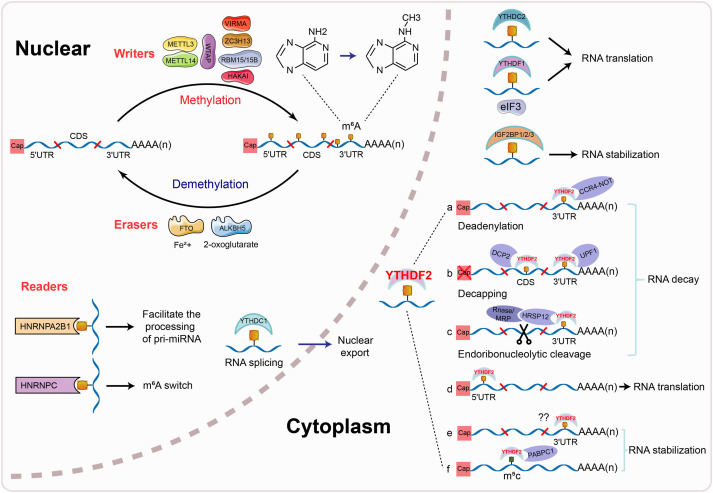
Inflammation is a double-edged sword in biology. Moderate immune responses effectively eliminate pathogens and promote tissue repair, while excessive or persistent inflammation drives acute and chronic diseases. N6-methyladenosine (m6A), a central RNA epigenetic modification, dynamically regulates inflammatory initiation, amplification, and resolution. Among m6A-binding proteins, YTHDF2—the first identified mammalian m6A reader—modulates inflammatory responses by recognizing m6A/m5C sites to control RNA stability and translation. This review reports novel insights into the role of YTHDF2 in regulating immune cell functions and inflammatory signaling pathways across various disease contexts. Specifically, it systematically summarizes the molecular mechanisms through which YTHDF2 contributes to the pathogenesis of inflammatory diseases and reviews recent advances in the development of selective therapeutic agents targeting YTHDF2. Additionally, the functional complexity of YTHDF2 within specific pathological environments is discussed, and the current challenges facing the translation of these findings into targeted therapies are outlined. This review is expected to serve as a theoretical foundation for prospective therapeutic strategies employing novel epigenomic regulation-based approaches to treat inflammatory diseases.