TTC21B variants disrupt the left-right asymmetry and pronephric development in zebrafish
TTC21B variants disrupt the left-right asymmetry and pronephric development in zebrafish
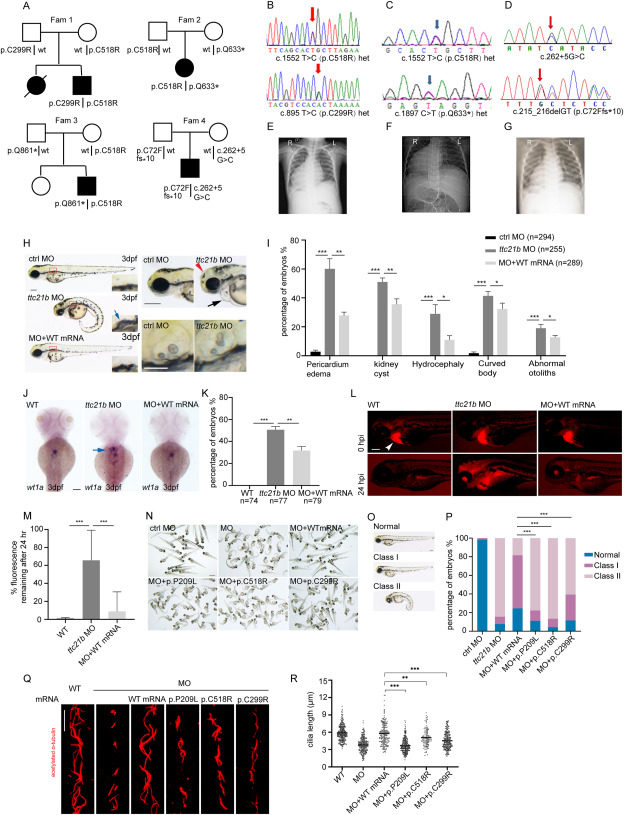
Nephronophthisis (NPHP) is an autosomal recessive kidney disease and is the most prevalent monogenic cause of end-stage renal disease in childhood. The tetratricopeptide repeat domain 21B (TTC21B) gene encodes the ciliary protein intraflagellar transport protein 139 (IFT139) and has been recently implicated in heterogeneous diseases, including nephronophthisis type 12 (NPHP12), short-rib thoracic dysplasia 4 (SRTD4), and Joubert syndrome (JBTS).1,2 In Europe and North Africa, the prevalent TTC21B variant c.626C > T (p.P209L) has been associated with focal segmental glomerulosclerosis in adults.2,3 To date, only a limited number of TTC21B gene variants have been reported in Chinese individuals, predominantly presenting with infantile NPHP, which differs from the manifestations observed in Caucasian patients.4,5 In this study, we identified novel TTC21B gene variants in Chinese children with NPHP and investigated their role in left-right asymmetry and pronephric development.