Molecular profiling unveils genetic complexity and identifies potential new driver mechanisms in head and neck paragangliomas
Molecular profiling unveils genetic complexity and identifies potential new driver mechanisms in head and neck paragangliomas
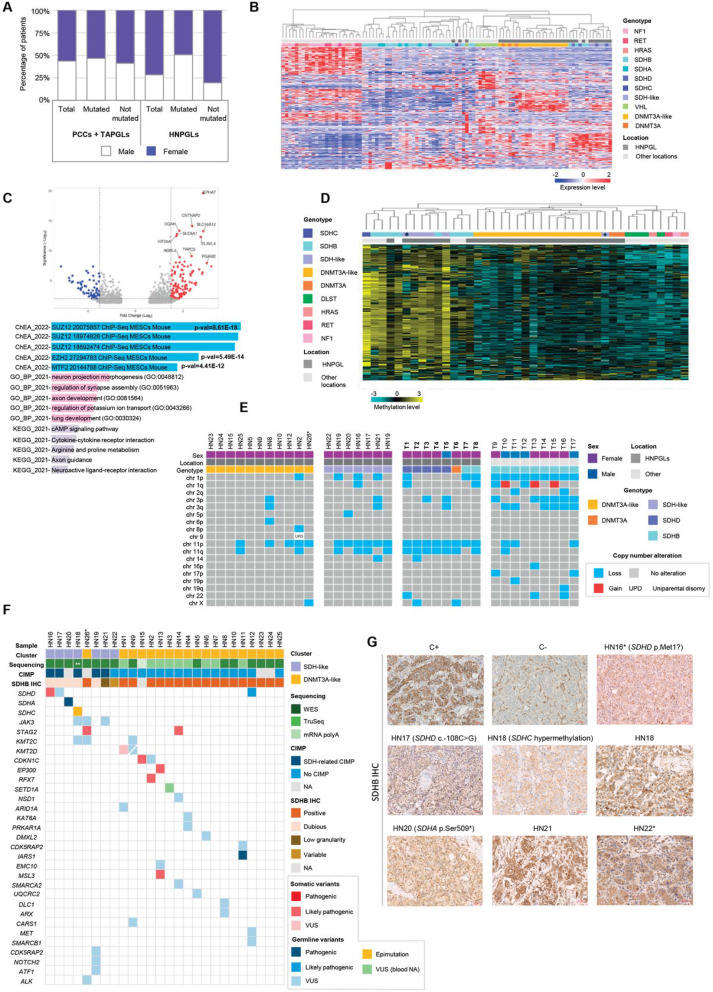
Pheochromocytomas and paragangliomas (together PPGLs) are rare neuroendocrine tumors arising from chromaffin cells located in the adrenal medulla and ganglia of the autonomic nervous system, respectively. Although paragangliomas located in the head and neck region (HNPGLs) represent approximately 60% of all paragangliomas,1 their genetic basis remains less well understood than that of PPGLs with other locations. Furthermore, HNPGLs have been largely excluded from comprehensive genomic profiling studies, leading to the classification of PPGLs into three molecular clusters: pseudohypoxic (C1), kinase signaling (C2), and Wnt-altered (C3). As a result, our understanding of the molecular basis of these tumors is limited, and the discovery of genes exclusively mutated in HNPGLs, such as DNA methyltransferase 3 alpha (DNMT3A),2 suggests that unique molecular pathways could be involved in their development. Here, we performed a multi-omic characterization of wild-type (WT) HNPGLs, which revealed the existence of two molecular subgroups: succinate dehydrogenase (SDH)-like and DNMT3A-like. In SDH-like HNPGLs, we identified previously undetected alterations in SDH genes despite their positive SDHB immunohistochemistry (IHC), highlighting the risk of overreliance on this method for genetic diagnosis of HNPGLs.3 Tumors within the DNMT3A-like cluster showed molecular characteristics consistent with polycomb repressive complex 2 (PRC2) dysfunctions, and stromal antigen 2 (STAG2) emerged as a promising new driver.