LINC00431 modulates KRAS and p53 stability to drive pancreatic cancer progression under hypoxia
LINC00431 modulates KRAS and p53 stability to drive pancreatic cancer progression under hypoxia
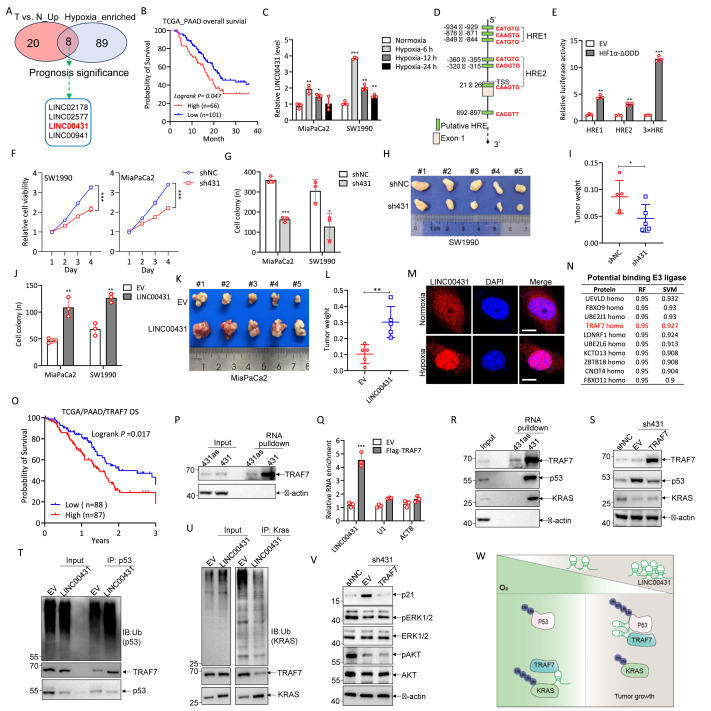
Long intergenic non-coding RNAs (lincRNAs), a subclass of long non-coding RNAs (lncRNAs) that do not overlap with other genes, play pivotal roles in cancer progression.1 The hypoxic tumor microenvironment, characterized by an excess of stromal cells and extracellular matrix and insufficient vascularization, is a distinctive feature of pancreatic ductal adenocarcinoma (PDAC).2 Nevertheless, a comprehensive screening and exploration of hypoxia-regulated lincRNAs in PDAC has not yet been conducted. This study analyzed the TCGA_PAAD dataset and identified LINC00431 as a hypoxia-responsive lincRNA. LINC00431 functions as an oncogenic lincRNA by modulating the protein levels of p53 and KRAS through the E3 ligase TRAF7 (tumor necrosis factor receptor-associated factor 7) in PDAC. These findings elucidate a novel mechanism in PDAC progression mediated by LINC00431, proposing it as a potential target for therapeutic intervention in PDAC.