Surface glia for modeling ALS-FTD-associated mutant C9orf72 toxicity in the nervous system of Drosophila
Surface glia for modeling ALS-FTD-associated mutant C9orf72 toxicity in the nervous system of Drosophila
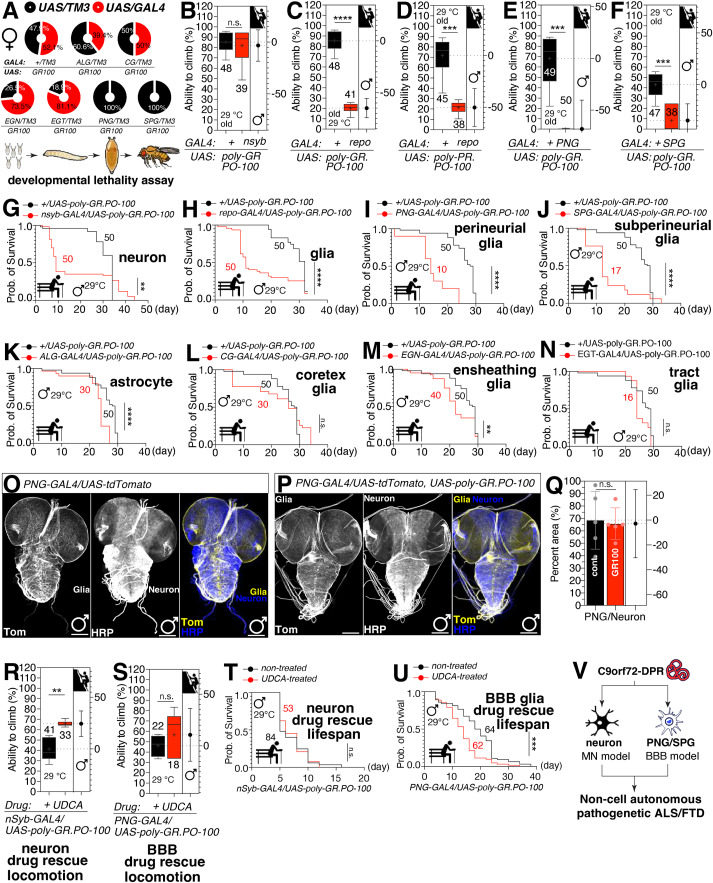
The GGGGCC repeat expansion in the chromosome 9 open reading frame 72 gene (C9orf72) is a leading genetic cause of amyotrophic lateral sclerosis and frontotemporal dementia (ALS-FTD). Despite the prevalence of this mutation, effective therapies remain elusive due to the complexity of the disease. Our study leverages Drosophila models to investigate the role of surface glia in mediating the toxicity associated with mutant C9orf72. With widely used neuronal and glial GAL4 (galectin 4) drivers and recently developed GAL4 drivers that separately mark each subtype of the glial system in fruit flies, we analyzed the toxicity of various C9orf72 mutants. Our findings demonstrate that surface glia, a model for the blood–brain barrier in vertebrates, exhibit heightened vulnerability to the expression of dipeptide repeat (DPR) originating from the mutant C9orf72 gene. This susceptibility results in pronounced developmental toxicity, as well as deficits in adult motor function and reduced lifespan. Significantly, the expression of GR100 DPR in surface glia did not lead to massive cell death of neurons or glia in the central nervous system. Additionally, the drug ursodeoxycholic acid (UDCA), which is intended to rescue the pan-neuronal Drosophila model, tended to negatively impact the locomotor activity and lifespan of glial cell models. Our findings suggest that glial cells may play a more substantial role in ALS-FTD pathogenesis than previously recognized, offering new avenues for therapeutic intervention.