Molecular characterization analysis of PANoptosis subtyping and identification of elastin as a novel therapeutic target in colorectal cancer
Molecular characterization analysis of PANoptosis subtyping and identification of elastin as a novel therapeutic target in colorectal cancer
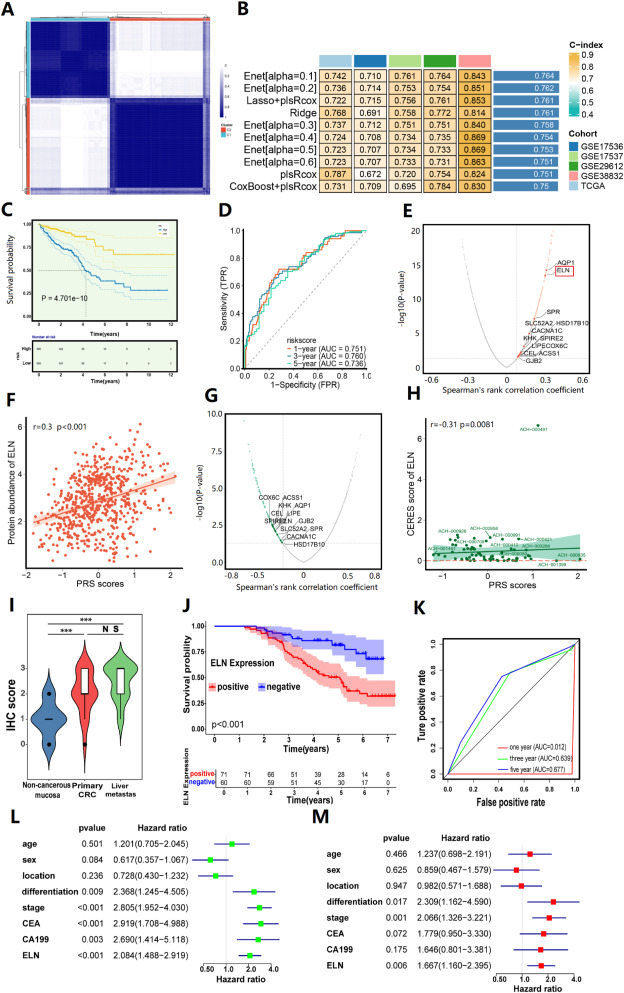
PANoptosis is a novel mode of programmed cell death and plays an important role in tumor development and metastasis.1,2 Numerous studies have shown that PANoptosis plays a crucial role in cancer,3, 4, 5 however, there is limited research to reveal the association between PANoptosis and colorectal cancer (CRC). Based on our results, a PANoptosis-related signature (PRS) was developed by a combination of 101 machine learning algorithms that could accurately predict survival outcomes in TCGA and four external validation cohorts exhibited high performance when compared with other public signatures. The PRS was highly correlated with tumor microenvironment, immunotherapy, drug sensitivity, and genomic mutation. Moreover, six and nine candidate drugs from CTRP and PRISM databases respectively were identified for the high PRS score patients. A candidate therapeutic target, elastin (ELN), was screened in CRC cell lines, and its expression and clinical value were further evaluated in the GSE132257 dataset. Furthermore, the clinical significance of ELN was evaluated through CRC tissue samples. In summary, the present study uncovered a promising application of the signature in the prognosis of CRC. The potential therapeutic target of ELN might provide direction and tailor more effective treatment for CRC.