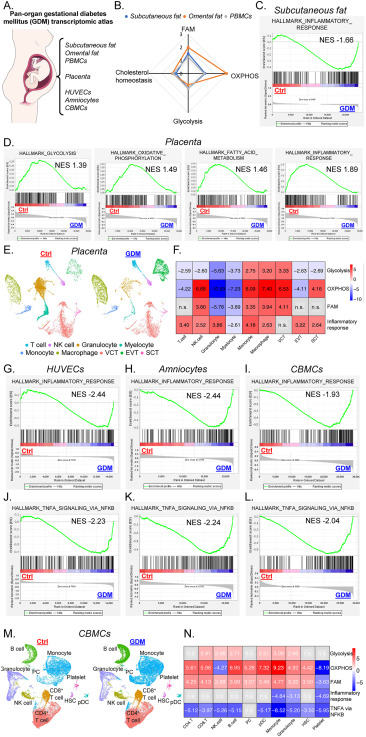
Elucidating the maternal and fetal metabolic and immune landscapes of gestational diabetes mellitus with a pan-organ transcriptomic atlas
Elucidating the maternal and fetal metabolic and immune landscapes of gestational diabetes mellitus with a pan-organ transcriptomic atlas
Gestational diabetes mellitus (GDM) is the most common pregnancy-associated complication, not only increasing the risk of other pregnancy-related pathologies, but also predisposing both mother and offspring to metabolic disorders like diabetes, obesity, and cardiovascular diseases.1 GDM is characterized by abnormal gestational hyperglycemia and insulin-regulated metabolism. Previous studies have also found some GDM-induced changes in maternal organs, including reprogrammed metabolisms in the placenta2 and chronic inflammation in adipose tissue.3 The effect of GDM on the offspring is less well-described, apart from empirical observations on long-term metabolic conditions.1 There is also some previous genomic knowledge regarding GDM-induced changes, but they are generally limited to individual genes as potential biomarkers, lacking systematic insights at a pathway level. Moreover, most aforementioned findings are from stand-alone studies, a more comprehensive overview is warranted, covering different compartments and reconciling the maternal and fetal aspects.