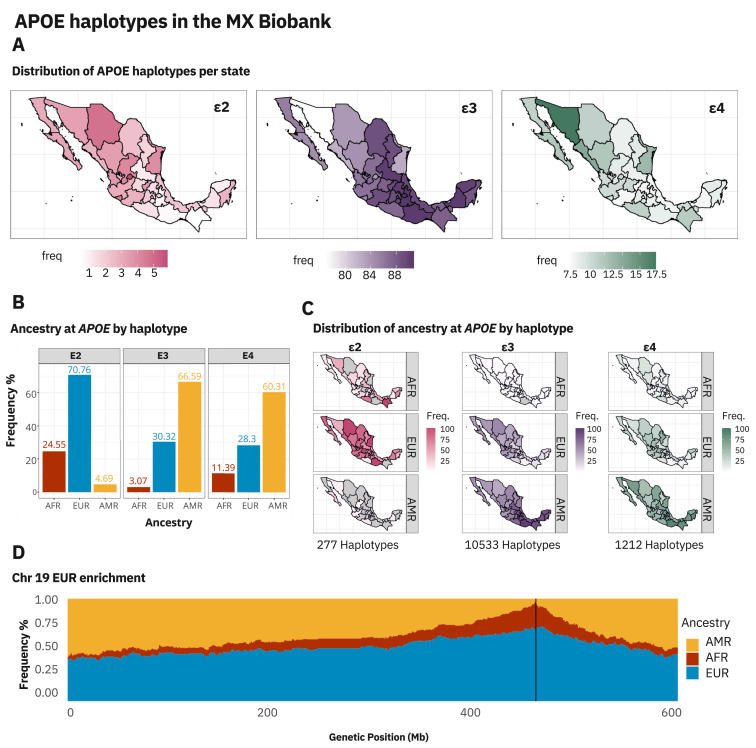
Genetic analysis of APOE reveals distinct origins and distribution of ancestry-enrichment haplotypes in the Mexican Biobank
Genetic analysis of APOE reveals distinct origins and distribution of ancestry-enrichment haplotypes in the Mexican Biobank
The apolipoprotein E (APOE) gene, located on chromosome 19, remains the primary genetic factor associated with late-onset Alzheimer's disease.1 In European populations, the ε4 haplotype of APOE, present in approximately 14% of individuals, significantly increases Alzheimer's disease risk, while the less common ε2 haplotype (∼8%) appears to confer a protective effect.2 Despite its significance, APOE has not been genetically characterized in Latin American countries, where Alzheimer's disease-related dementia disproportionately affects individuals.3