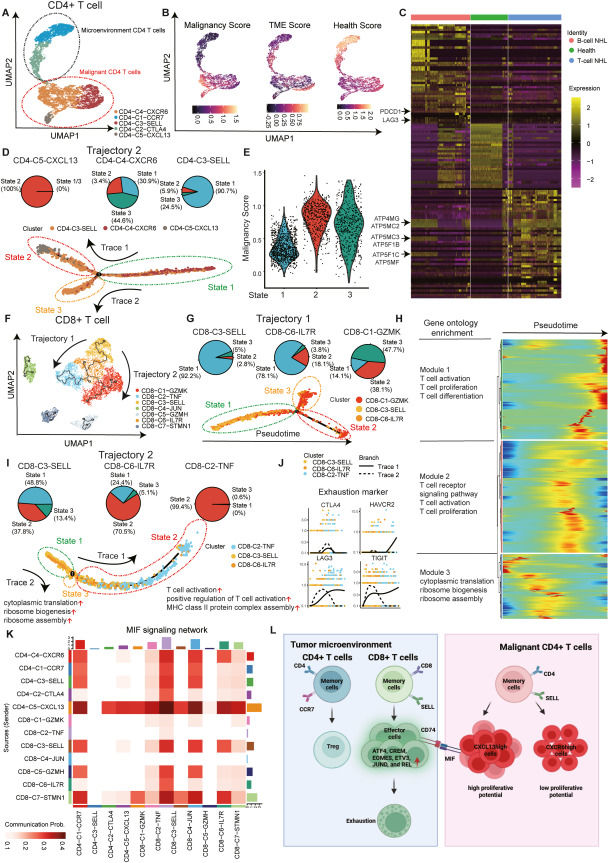
The single-cell landscape exploring abnormal T cell states and developmental trajectories in heterogeneous non-Hodgkin lymphoma
The single-cell landscape exploring abnormal T cell states and developmental trajectories in heterogeneous non-Hodgkin lymphoma
The aberrant differentiation and state transition of the T cell lineage underpin the pathogenesis of non-Hodgkin lymphoma (NHL). Tumor cells originating from B or T cells form the complicated dynamic network with components in the tumor microenvironment (TME).1 To orchestrate a tumor-supportive and immunosuppressive environment, tumor cells mainly build contact-dependent communication and paracrine signaling to reshape non-malignant host cells in the TME and remodel the extracellular matrix (ECM).2,3 Angiogenic switching, T cell dysfunction, and ECM crosslinking in the TME make significant contributions to tumor survival, infiltration, and progression. However, the mechanisms driving these processes remain poorly understood.