Ribonucleotide reductase M1 regulates the cell cycle via minichromosome maintenance proteins
Ribonucleotide reductase M1 regulates the cell cycle via minichromosome maintenance proteins
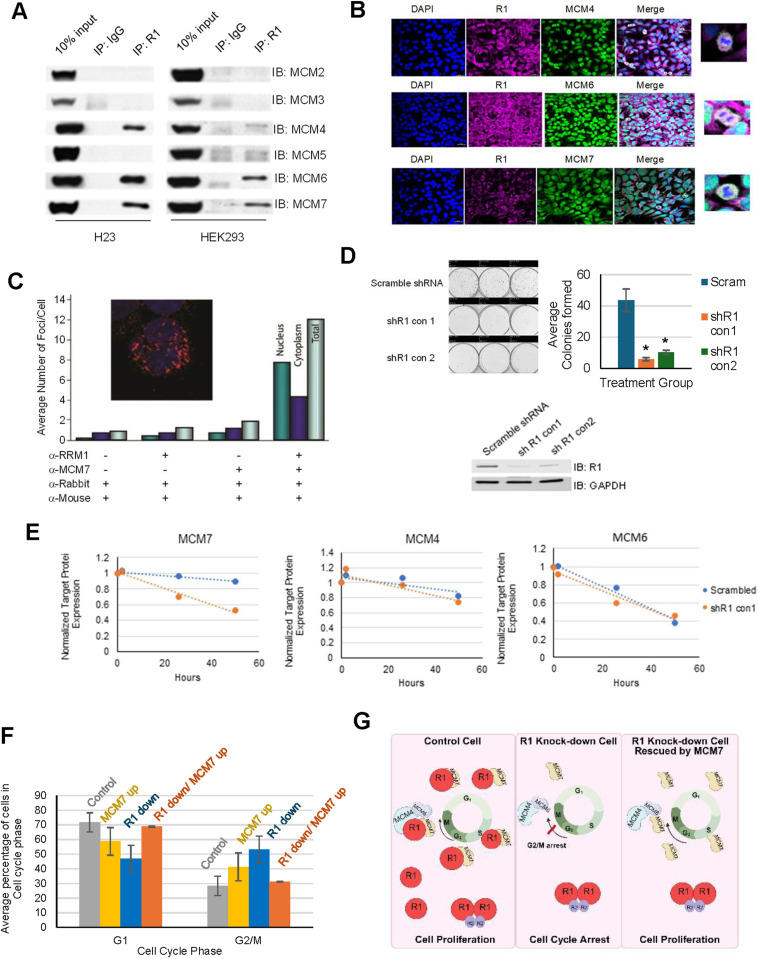
Ribonucleotide reductase (RNR) is the key enzyme converting ribonucleotides to deoxyribonucleotides.1 It forms a heterotetramer consisting of two regulatory subunits (R1) (encoded by RRM1) and two catalytic subunits (R2) (encoded by RRM2).1 Here we report that the catalytic minichromosome maintenance (MCM4/6/7) proteins,2 which are essential for DNA replication, interact with R1, but not R2. These studies were initiated after we had found a positive correlation between R1 expression and survival in patients with lung cancer.3 We found that R1 interacted with catalytic MCM4/6/7 in M-phase cells and MCM7 in non-M-phase cells, and that R2 overexpression did not disrupt these R1/MCM interactions. While knockdown of R1 decreased the protein and mRNA levels of MCM7 and arrested cells at the G2/M phase, overexpression of MCM7 in R1 knockdown cells relieved the G2/M arrest, leading to cell proliferation. dNTP pools do not affect cell growth in control and R1 knockdown cells, suggesting that R1's function in RNR does not influence R1's function in cell proliferation. Furthermore, there was a positive correlation between R1 and MCM7 expression in a cohort of lung cancer patient samples. Overall, our findings suggest that R1 regulates cell cycle progression through modulation of MCM7 levels, implicating that RNR and MCMs collaborate in cell cycle regulation.