PANDORA-seq reveals human sperm sncRNA signature endowed with sperm quality assessment
PANDORA-seq reveals human sperm sncRNA signature endowed with sperm quality assessment
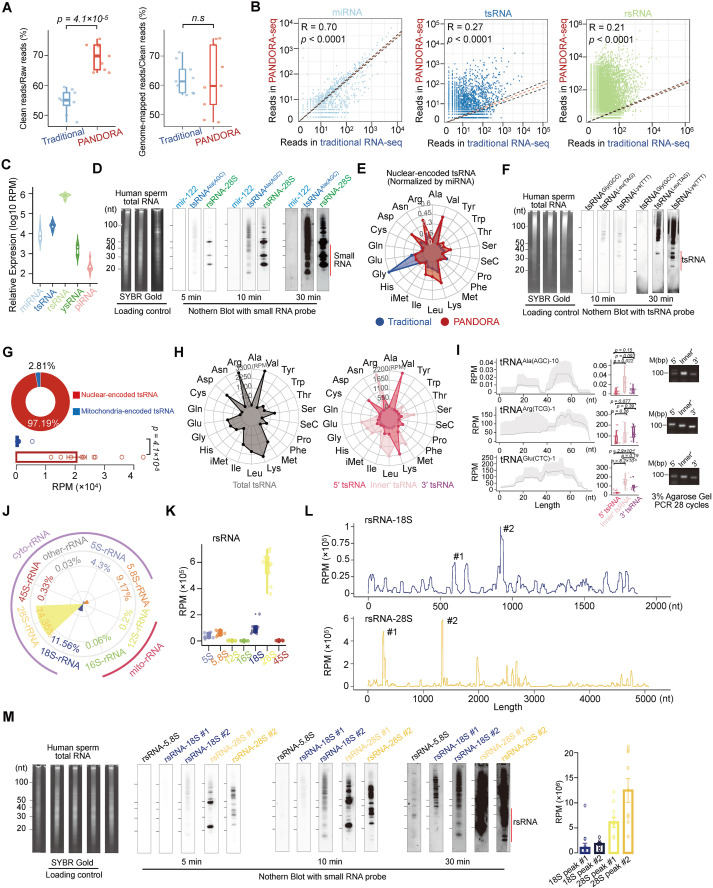
One of the leading causes of human subfertility is the continuous decline in semen quality, contributing to a global fertility crisis. Over half of subfertile men suffer from asthenozoospermia and teratozoospermia, with mechanisms still largely unknown. Traditional small noncoding RNA sequencing (sncRNA-seq) primarily targets miRNAs, failing to capture the broader spectrum of small noncoding RNAs (sncRNAs), including abundant transfer RNA-derived small RNAs (tsRNAs) and ribosomal RNA-derived small RNAs (rsRNAs). These sncRNAs possess complex RNA modifications and non-canonical terminal structures, impeding their accurate profiling. In this prospective cohort study, we addressed these limitations by combining our state-of-the-art PANDORA-seq with traditional sncRNA-seq, which generated the most comprehensive sncRNA landscape of human sperm from 25 participants with asthenozoospermia, teratozoospermia, or normozoospermia. PANDORA-seq significantly improved the annotation efficiency of sncRNAs and delivered a more detailed characterization for tsRNAs and rsRNAs, which were strongly correlated with key clinical indicators of sperm quality, thereby enhancing our understanding of the landscape of human sperm sncRNAome and its association with male subfertility. Importantly, machine learning with Lasso regression identified specific tsRNA/rsRNA signatures as highly effective clinical biomarkers (AUC ≥ 0.83) for predicting sperm abnormalities, offering significant improvements over World Health Organization-based semen quality assessments and novel insights for clinical diagnosis.