Multiomic insights into the MPO-mediated NET formation pathway in alcohol-induced epilepsy risk
Multiomic insights into the MPO-mediated NET formation pathway in alcohol-induced epilepsy risk
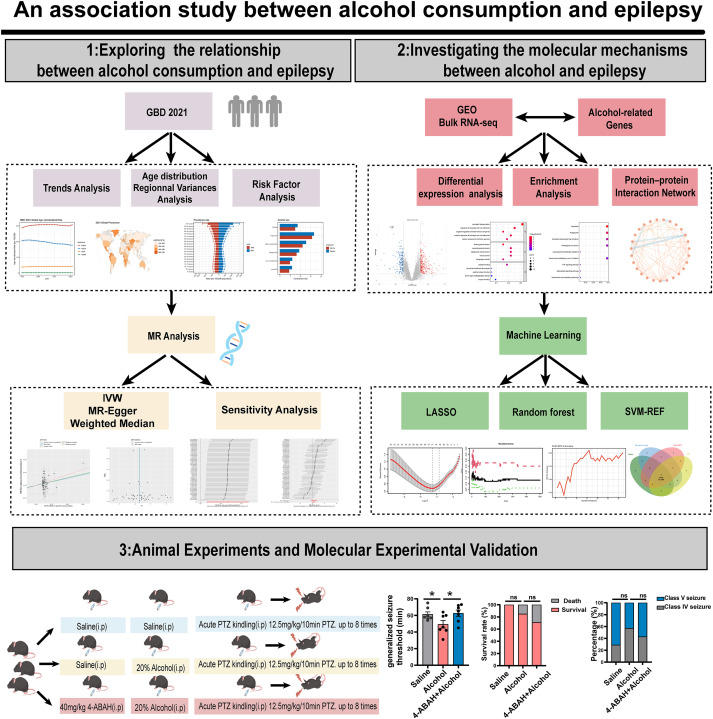
Epilepsy is a highly prevalent chronic central nervous system disorder that imposes substantial societal and economic burdens. Inconsistent associations of alcohol consumption, identified as a major global health risk factor, with epilepsy risk have been reported. The aim of the present study was to assess the relationship between alcohol use and epilepsy and to identify potential underlying mechanisms, with a particular focus on the role of neutrophil extracellular traps (NETs), using an integrated multiomic approach. We assessed the global risk of alcohol consumption for epilepsy using data from the Global Burden of Disease Study 2021, and we conducted a Mendelian randomization (MR) analysis to evaluate causality. Additionally, we employed machine learning algorithms and protein–protein interaction networks to identify key genes. Our results indicate that alcohol consumption significantly contributes to the risk of epilepsy, as confirmed by MR analysis (odds ratio = 1.30, 95% confidence interval 1.06–1.60; p = 0.011). Functional enrichment analysis revealed pathways related to NET formation, whereas machine learning identified key genes such as myeloperoxidase (MPO) and neutrophil elastase. Animal and molecular experiments confirmed that acute alcohol exposure increases the susceptibility to epileptic seizures, whereas the MPO inhibitor 4-aminobenzoic acid hydrazide showed therapeutic potential for alcohol-induced epilepsy. This study provides novel insights into the role of NETs in alcohol-induced epilepsy and highlights potential therapeutic targets, thereby contributing to the development of innovative treatment strategies for epilepsy prevention and management.