Chondrogenic potential of mesenchymal progenitors from somatic and cartilage-derived iPSCs is predicted by their transcriptomic signatures
Chondrogenic potential of mesenchymal progenitors from somatic and cartilage-derived iPSCs is predicted by their transcriptomic signatures
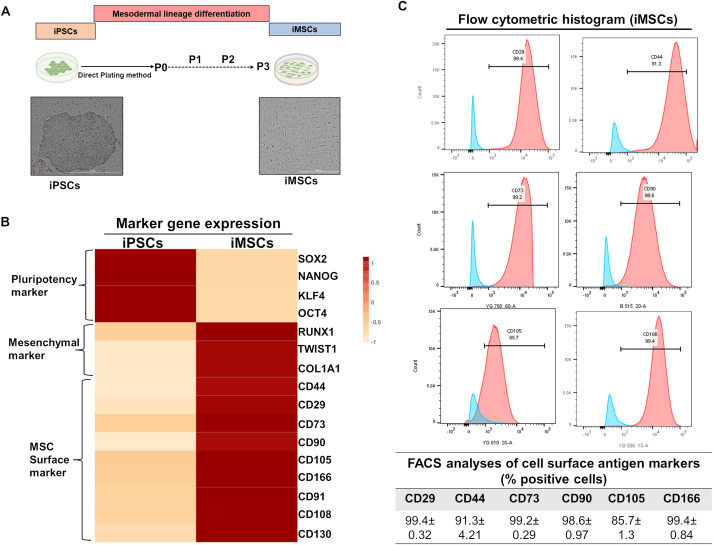
Mesenchymal stem cells (MSCs) are widely used in regenerative therapy but face limitations like low abundance, replicative senescence, donor variability, and restricted plasticity. Induced pluripotent stem cell-derived MSCs (iMSCs) may provide an alternative, but their similarities or intrinsic differences with adult MSCs remain unknown. This study compares the chondrogenic potential of iMSCs derived from chondrocyte-specific induced pluripotent stem cells, with bone marrow-derived MSCs, adipose-derived stem cells, and dedifferentiated chondrocytes. Chondrogenic differentiation was performed in high-density pellet cultures with short-term or long-term TGFβ3 treatment. Chondrogenic gene arrays, gene regulatory networks, and gene ontology analysis revealed divergent signaling pathways. Bulk RNA sequencing was performed to characterize the transcriptomic profiles of each MSC. Results showed that iMSCs produced cartilage with hyaline-like features and minimal hypertrophy, distinguishing them phenotypically from adult MSCs. Gene regulatory network analyses identified EGF, FGFR, FLT1, and HIFA as iMSC hub genes for chondrogenic differentiation. Molecular signaling analysis unveiled that TGFβ3 induced SMAD2/3, not SMAD1/5, suppressing hypertrophy in iMSC chondrogenesis. RNA sequencing highlighted cell-specific differences, functional heterogeneity, and divergent cell signaling profiles between iMSCs and adult MSCs. Using integrated transcriptome and proteome analyses, we identified and validated eight novel non-classical CD markers that may help further characterize MSCs and potentially discriminate iMSCs from other cell types. This study further advanced our understanding of MSC behaviors, emphasizing the importance of origin-specific considerations and refining the molecular description of iMSCs as an unlimited source of chondroprogenitors for cartilage regeneration.