Potential oncogenic role of occult hepatitis B virus pre-S mutations: Activation of Akt/mTOR/Cyclin D1 signaling drives cell cycle dysregulation and proliferation in hepatocellular carcinogenesis
Potential oncogenic role of occult hepatitis B virus pre-S mutations: Activation of Akt/mTOR/Cyclin D1 signaling drives cell cycle dysregulation and proliferation in hepatocellular carcinogenesis
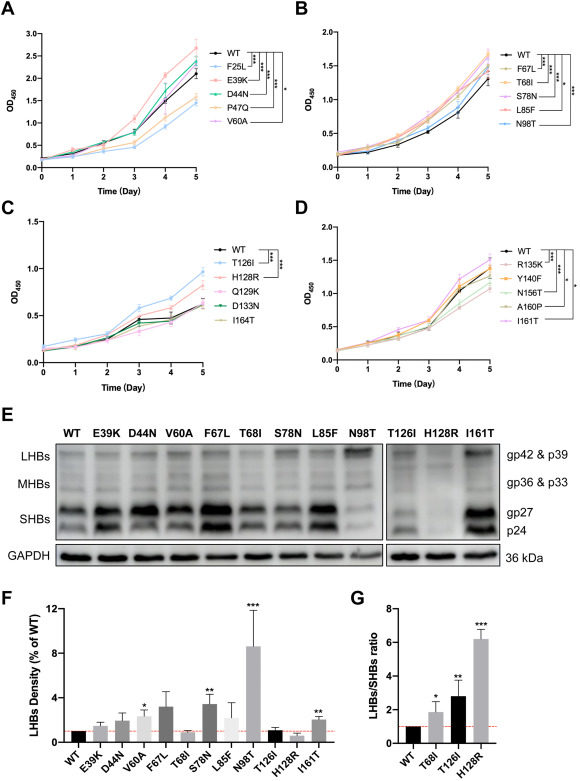
Hepatitis B virus (HBV) infection remains a severe global public health challenge, with hepatocellular carcinoma being a primary cause of HBV-related mortality. Occult HBV infection (OBI) represents a distinct type of HBV infection that has been increasingly linked to hepatocellular carcinoma development, yet the precise molecular mechanisms underlying this association remain poorly elucidated. Although HBV pre-S deletion mutations have been shown to enhance cell proliferation and contribute to hepatocarcinogenesis, the biological functions of other types of pre-S mutations, particularly point mutations, are still mostly unexplored. In our prior studies, we identified several high-frequency pre-S point mutations from OBI blood donors. Within this research, we systematically explored the effects of these OBI-associated pre-S mutations on host cell proliferation and assessed their potential oncogenic properties. Cell proliferation assays revealed that several pre-S mutations significantly enhanced the proliferative capacity of host cells. Mechanistically, five pre-S mutations (E39K, D44N, N98T, H128R, and I161T) activated the Akt/mTOR signaling cascade, up-regulated Cyclin D1 expression, and induced G1-to-S phase cell cycle progression. Further analyses suggested that the large HBV surface protein (LHBs) likely acts as the key mediator linking pre-S mutations to signaling activation and cellular proliferation. These findings provide novel mechanistic understandings of the oncogenic potential of pre-S point mutations in hepatocarcinogenesis and may facilitate the identification of high-risk individuals within OBI populations as well as the development of treatment strategies for hepatocellular carcinoma linked to HBV.