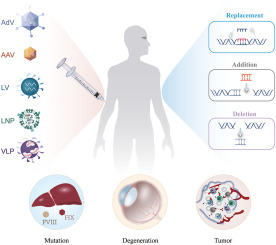
In vivo gene therapy: A strategy for mutations, degenerations, and tumors
In vivo gene therapy: A strategy for mutations, degenerations, and tumors
Gene mutations, organ function degeneration, and carcinogenesis are the primary threats to human health. Gene therapy, which involves the addition, deletion, regulation, and editing of genes, as well as the development of genetic vaccines, can potentially cure genetic mutation disorders, degenerative diseases, and cancers. Ex vivo gene therapy has recently been used to treat monogenetic mutation diseases of the hematopoietic system and cancers. However, in vivo gene therapy remains inapplicable. The primary elements of in vivo gene therapy include deoxyribonucleic acid (DNA) nucleases (e.g., zinc finger nucleases, transcription activator-like effector nucleases), CRISPR-Cas system, base editors, prime editors, and delivery vectors (e.g., viral and non-viral vehicles). According to the development of DNA nucleases and delivery vectors, in vivo gene therapy can be made available for future clinical use. The current review summarizes the development of DNA nucleases and delivery vectors for in vivo gene therapy, emphasizing recent progress.