Defective biological networks associated with pseudogene-derived lncRNAs in cancer drug resistance: Promising prospects for their clinical targets in cancer therapy
Defective biological networks associated with pseudogene-derived lncRNAs in cancer drug resistance: Promising prospects for their clinical targets in cancer therapy
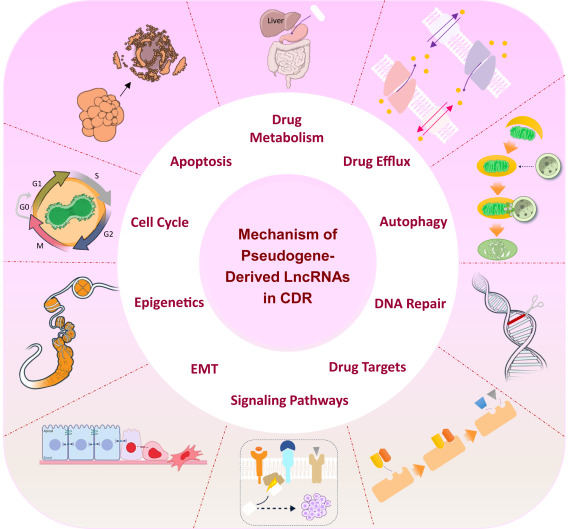
Cancer is a major cause of mortality globally, characterized by its multifactorial nature and intricate treatment procedures. The main treatment options include targeted drug therapies and chemotherapy. However, overcoming drug resistance remains a significant challenge in curing cancer patients. In recent decades, substantial efforts have been made to explore the resistance of cancer cells to anti-cancer agents and to create methods to counteract this resistance. Cancer cell resistance can be attributed to various factors, including long non-coding RNAs (lncRNAs) involved in cell cycle dysregulation, abnormal DNA repair, cell proliferation, epithelial–mesenchymal transition, metastasis, apoptosis, autophagy, drug efflux transporters, epigenetic modifications, and the formation of cancer stem cells. Pseudogenes are genomic regions that harbor impaired or dysfunctional versions of genes. Although pseudogenes were traditionally considered non-functional, a growing number of them are now being found to serve important biological functions. Recent research has demonstrated that mutations and dysregulation of pseudogene-derived lncRNAs are linked with various human diseases, such as cancer drug resistance. This review concentrates on exploring the latest discoveries that elucidate the diverse molecular functions of regulatory pseudogene-derived lncRNAs implicated in cancer drug resistance and the therapeutic possibilities for overcoming drug resistance.