GXYLT2 serves as a prognostic biomarker and is associated with β-catenin activation and gastric cancer aggressiveness
GXYLT2 serves as a prognostic biomarker and is associated with β-catenin activation and gastric cancer aggressiveness
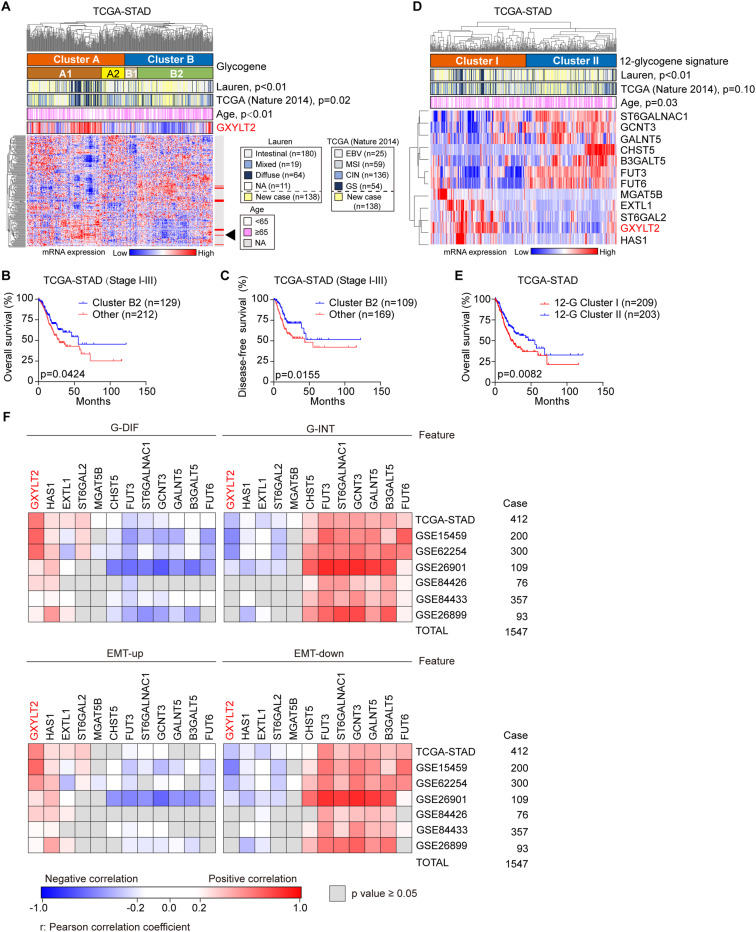
Gastric cancer (GC) is a significant global health challenge due to its high incidence and mortality rate. However, the existing classification methods for GC still have limitations. Given the pivotal role of aberrant glycosylation in GC progression, there is a compelling need to develop a novel molecular classification for this disease. Using a comprehensive analysis of 186 glycogenes across seven public datasets encompassing 1547 GC patients, a 12-glycogene signature-based molecular classification was established, which was linked to tumor stage and prognosis. Among them, the overexpression of glucoside xylosyltransferase 2 (GXYLT2) was positively associated with tumor stage, diffuse subtype, and unfavorable survival outcomes in GC patients. Furthermore, GXYLT2 depletion significantly inhibited the proliferation, invasion, and sphere formation capacities in HGC-27, MKN1, and MKN45 GC cells with diffuse-subtype features, whereas its ectopic expression in AGS and MKN74 GC cells with intestinal subtype did not enhance their aggressive properties. Moreover, RNA sequencing analysis revealed that GXYLT2 knockdown resulted in the decrease of Wnt/β-catenin signaling, which was corroborated by TOPFlash reporter activity, β-catenin phosphorylation, immunofluorescence staining, and nuclear-cytoplasmic separation assays for its nuclear location, via the activation of PP2A complex dependent on GXYLT2-PP2A Aα interaction. Notably, GXYLT2 knockdown significantly suppressed tumorigenicity in vivo. Taken together, we identified GXYLT2 as a potential prognostic biomarker for GC patients, and targeting GXYLT2 suppressed the tumor aggressiveness and inhibited the Wnt/β-catenin pathway, which may provide a potential therapeutic target for GC patients.