Veratramine influences the proliferation of human osteosarcoma cells through modulating the PI3K/AKT signaling cascade
Veratramine influences the proliferation of human osteosarcoma cells through modulating the PI3K/AKT signaling cascade
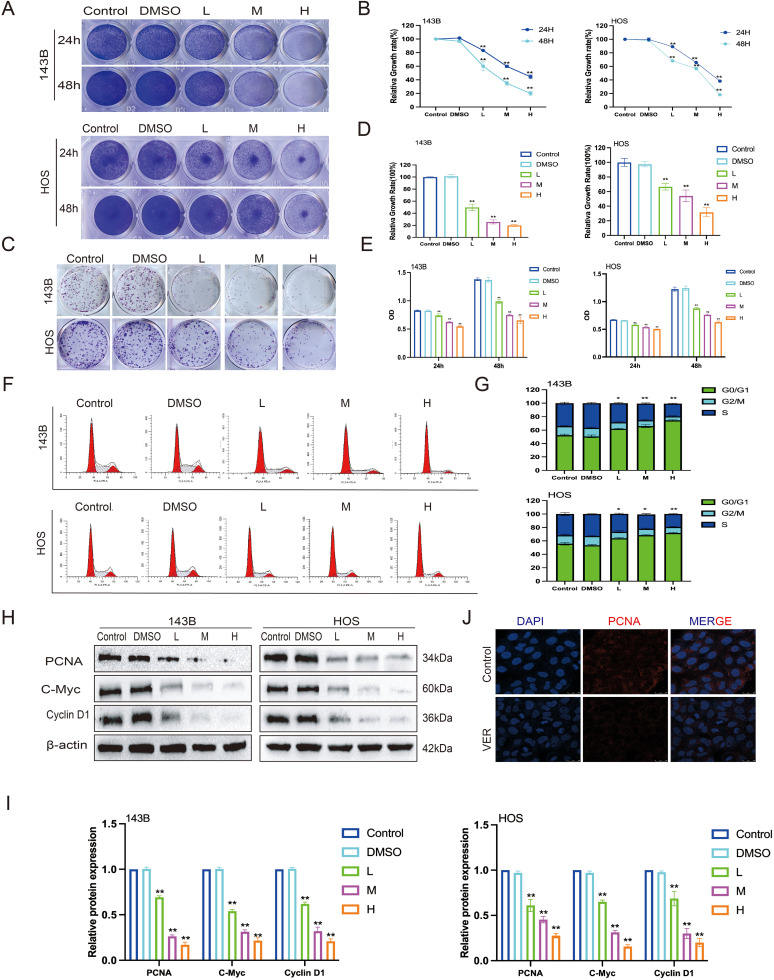
Osteosarcoma (OS) is a highly aggressive tumor with a propensity for early metastasis. Current treatment methods, such as chemotherapy, often bring significant side effects, affecting patients' quality of life. Veratramine (VER), an alkaloid derived from the American lily plant, has shown potential in cancer treatment. This study looks at the effects and mechanisms of VER on osteosarcoma. VER's impact was assessed using a variety of procedures, including crystal violet staining, the CCK-8 assay, and the colony formation assay, which measured cell proliferation. Wound healing assay and transwell assay were employed to evaluate the migration and invasion of osteosarcoma cells. Hoechst33258 staining, flow cytometry, and transmission electron microscopy were used to investigate apoptosis. Protein expression was assessed using western blotting and immunofluorescence. Blood tests and hematoxylin-eosin staining were used to establish VER's in vivo safety, and its effectiveness was proven using an orthotopic tumor model. The results showed that VER greatly decreased osteosarcoma cell growth, migration, and invasion while inducing apoptosis. Animal tests confirmed these findings, confirming VER's high efficacy and safety in vivo. VER might function by inhibiting the PI3K/AKT signaling pathway. To sum up, VER shows promise in treating osteosarcoma by exhibiting significant anti-tumor activity in laboratory and animal studies, likely through the regulation of the PI3K/AKT signaling pathway.