Blockade of co-inhibitory receptor immune checkpoint protein TIM3/CD366 augments the anti-cancer activity of CAR-T therapy in solid tumors: An ovarian cancer example
Blockade of co-inhibitory receptor immune checkpoint protein TIM3/CD366 augments the anti-cancer activity of CAR-T therapy in solid tumors: An ovarian cancer example
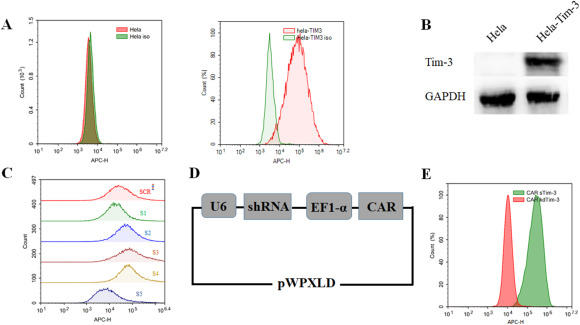
Strategies that enhance the function of chimeric antigen receptor-modified T (CAR-T) cells for solid tumors are critical. Inhibitory immuno-checkpoints blockade could potentially enhance CAR-T cell function. TIM-3 is an important negative regulator of T cell activity, but whether TIM-3 blockade could affect CAR-T cell function remains unclear. In our study, we successfully constructed TIM-3-silenced CAR-T cells by dual-promoter lentivirus vectors that simultaneously express the TIM-3 targeting short hairpin RNA (shRNA) and a third-generation CAR recognizing HER2. We demonstrated that down-regulation of TIM-3 did not affect the phenotype of CAR-T cells. CAR-T cells with TIM-3 blockade exhibited higher lytic cytotoxicity to target cells in vitro. Additionally, TIM-3-silenced CAR-T cells displayed robust anti-tumor activity in a murine xenograft model, which is comparable to standard CAR-T cells. Our study demonstrates the effect of down-regulation of immune checkpoint TIM-3 on the anti-tumor function of CAR T cells, providing new ideas for improving the potency of CAR-T cell therapies in solid tumors.