RFX3 loss disrupts non-coding RNA networks in iPSC-derived pancreatic progenitors
RFX3 loss disrupts non-coding RNA networks in iPSC-derived pancreatic progenitors
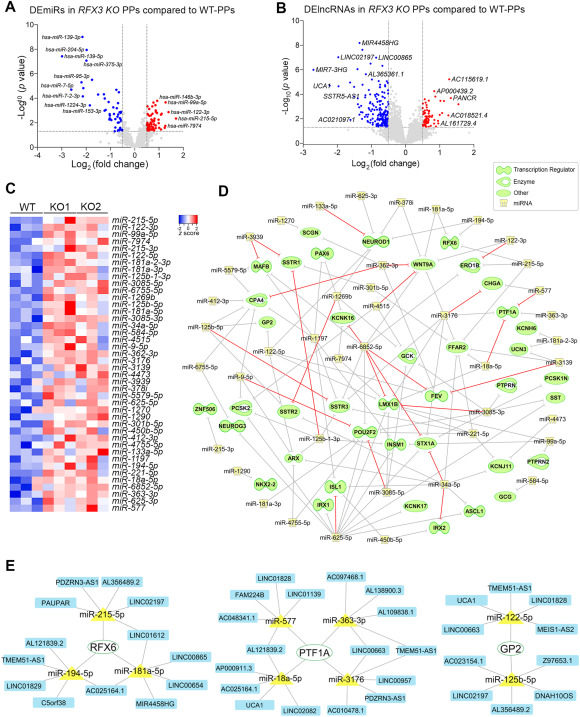
Regulatory factor X 3 (RFX3), a member of the highly conserved RFX family of transcription factors, has recently been identified to be essential for human pancreatic endocrine development and β-cell function. Recently, we showed that loss of RFX3 during pancreatic differentiation of human induced pluripotent stem cells (iPSCs) disrupts endocrine gene regulation, reduces islet hormone-secreting cells, impairs β-cell function, and notably leads to increased cell death and aberrant specification toward enterochromaffin cells.1 Non-coding RNAs (ncRNAs), including microRNAs (miRNAs) and long ncRNAs (lncRNAs), play critical roles in regulating pancreatic development, especially in the formation and function of pancreatic islets and β-cells.2 While RFX3’s role in gene regulation is established, its impact on ncRNA networks during pancreatic differentiation remains poorly understood.