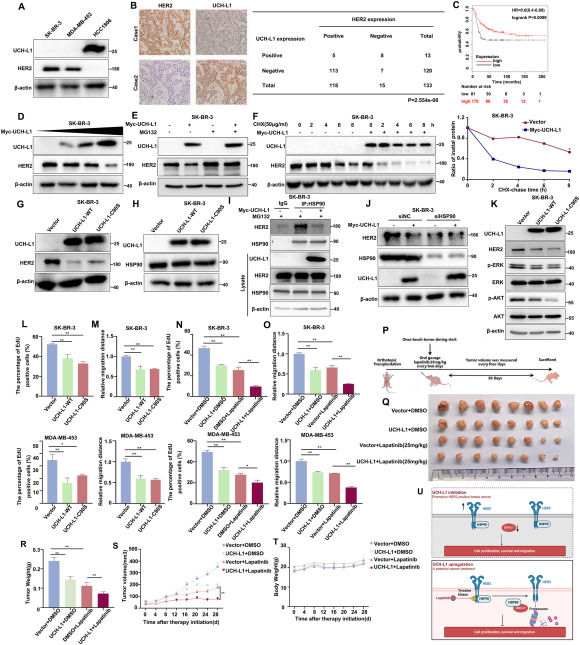
UCH-L1 down-regulates HER2 expression and increases lapatinib sensitivity by interacting with HSP90 in HER2-positive breast cancer
UCH-L1 down-regulates HER2 expression and increases lapatinib sensitivity by interacting with HSP90 in HER2-positive breast cancer
HER2-positive breast cancer exhibits high aggressiveness, a propensity for recurrence, and a poor prognosis.1 Approximately 16%–22% of early stage patients still experience recurrence, and 22%–25% of patients with metastatic HER2+ breast cancer exhibit primary or acquired resistance. Therefore, it is necessary to investigate the molecular mechanisms that regulate HER2 status in order to develop new therapeutic strategies. Ubiquitin carboxyl-terminal hydrolase-L1 (UCH-L1), also known as protein gene product 9.5 (PGP9.5), is a member of the ubiquitin C-terminal hydrolase (UCH) family.2 UCH-L1 can play either a pro- or anti-tumorigenic role in different types of cancer because UCH-L1 acts by regulating different substrates. The overexpression of UCH-L1 has been observed to induce G0/G1 cell cycle arrest and apoptosis by stabilizing p53. In another independent study, UCH-L1 was observed to interact with AKT in MCF-7 cells, resulting in the up-regulation of phosphorylated AKT and an increase in the invasive capacity of MCF-7 cells. Therefore, it is crucial to investigate the mode of action of UCH-L1 in different cancers.3