Immune checkpoint B7x promotes immune evasion and resistance to PD-1/PD-L1 blockade in bladder cancer
Immune checkpoint B7x promotes immune evasion and resistance to PD-1/PD-L1 blockade in bladder cancer
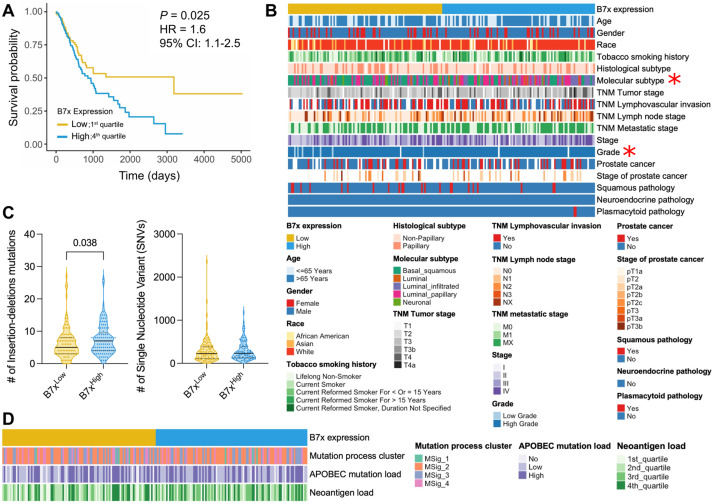
Cancer cells adopt multiple strategies to avoid detection and destruction by the immune system, including exploiting immune checkpoint pathways. B7x (B7-H4, B7S1, or VTCN1), a member of the B7/CD28 family, is frequently expressed in advanced bladder cancer, yet its role in bladder cancer progression and resistance to therapy remains poorly understood. Resistance to PD-1/PD-L1 immune checkpoint blockade immunotherapy significantly limits durable responses, with only 20%–25% of patients with muscle-invasive bladder cancer (MIBC) achieving long-term benefits. Here, we demonstrated that B7x mRNA and protein expression were associated with poor survival outcomes in MIBC patients and mouse models of bladder cancer, respectively. Stable expression of B7x in immune-competent bladder cancer mouse models resulted in enhanced tumor growth and splenomegaly, driven by the exclusion and suppression of tumor-infiltrating antitumor immune cells and the enrichment of pro-tumor and immunosuppressive cells. Consistently, in the IMvigor210 clinical trial, high B7x mRNA expression was correlated with poorer survival in MIBC patients treated with PD-L1 blockade. Notably, combination therapy targeting B7x alongside PD-1/PD-L1 or CTLA-4 blockade reduced tumor burden and overcame resistance to monotherapy. These findings establish B7x as a substantial driver of immune evasion in bladder cancer and highlight its potential as a therapeutic target to improve immune checkpoint blockade efficacy in MIBC.