PDK1 elevation was induced by epigenetic modifications of KDM3A and METTL16 to mediate TKI resistance and cancer development
PDK1 elevation was induced by epigenetic modifications of KDM3A and METTL16 to mediate TKI resistance and cancer development
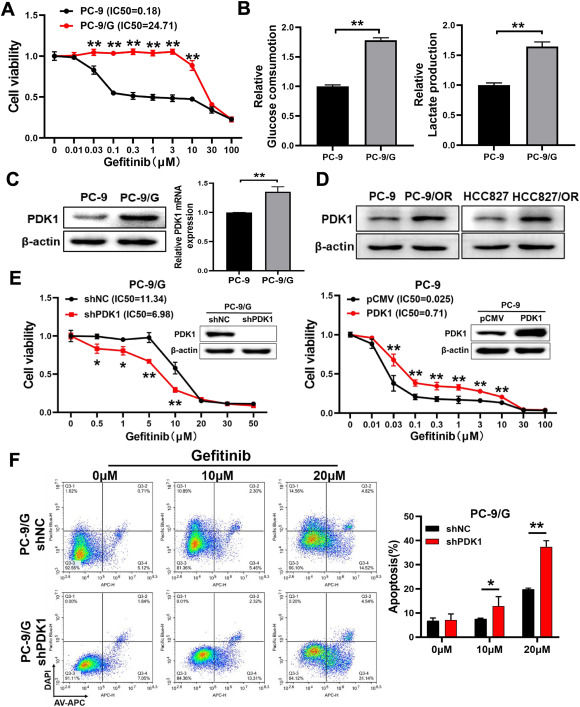
Lung cancer is the leading cause of cancer-related death and has the second-highest incidence worldwide. For patients with advanced EGFR-mutated non-small cell lung cancer, EGFR tyrosine kinase inhibitors (EGFR-TKIs) are the preferred treatment option; however, acquired resistance to TKIs is inevitable. Gefitinib and osimertinib, the first-generation and third-generation EGFR-TKI, have shown promising results in patients with EGFR-mutated lung cancer in clinical treatment. Here, we identified that pyruvate dehydrogenase kinase 1 (PDK1) was up-regulated in gefitinib- and osimertinib-resistant cell lines, and PDK1 knockdown rendered cells more sensitive to TKI treatment. PDK1 expression levels were significantly increased in lung, colon, liver, and breast cancer tissues compared with those in normal tissues. Histone demethylase KDM3A was also induced in TKI-resistant cell lines, and demethylated histone H3 lysine 9 to facilitate PDK1 expression to regulate TKI resistance. Further study demonstrated that METTL16 promoted the m6A modification of PDK1 mRNA, and the m6A reader IGF2BP1 directly recognized and enhanced PDK1 mRNA stability. Interestingly, KDM3A also induced METTL16 expression. Moreover, PDK1 inhibitor JX06 rendered cancer cells more sensitive to gefitinib treatment in vivo, and JX06 and gefitinib combination treatments have a synergic effect to inhibit tumor growth. In conclusion, the KDM3A/METTL16/PDK1 axis plays an important role in cancer development and TKI resistance, which may offer new prognostic biomarkers and therapeutic targets for TKI resistance in the future.