Human induced pluripotent stem cell-derived microglia with 1q21.1 deletion and duplication exhibit aberrant inflammatory response
Human induced pluripotent stem cell-derived microglia with 1q21.1 deletion and duplication exhibit aberrant inflammatory response
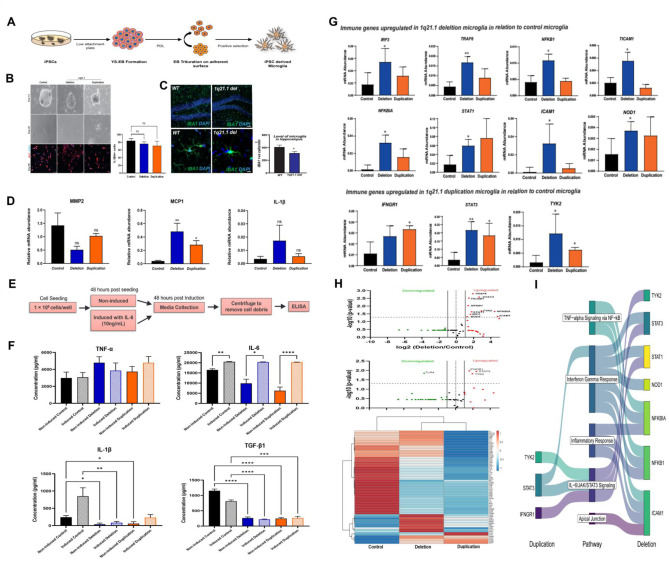
Neuroinflammation plays a significant role in neurodevelopmental and neuropsychiatric disorders (NPDs), such as autism spectrum disorder, schizophrenia, and major depressive disorder. Microglia, the resident immune cells of the central nervous system, are essential for brain development, engaging in neurogenesis, synaptic pruning, and immune surveillance. Elevated cytokine levels and gene expression, leading to increased microglial activity, have been previously detected in autism spectrum disorder patients, suggesting a link with certain copy number variants (CNVs).1 The role of CNVs in the progression of NPDs linked to microglial dysfunction remains largely unknown. Therefore, we generated an in vitro microglial model system from patient-derived induced pluripotent stem cells (iPSC) carrying a deletion or duplication at the 1q21.1 chromosomal region, previously associated with developmental delay, autism spectrum disorder, and schizophrenia. Our study demonstrates a morphological dissimilarity, dysregulation in microglial cytokine production, and responsiveness in the presence of 1q21.1 CNV. Furthermore, our findings underscore the up-regulation of key genes regulating the inflammation and immune response, such as ICAM1, TRAF6, STAT3, and IFNRG1 in 1q21.1 CNV, suggesting a link between immune dysfunction and genetic abnormality at the cellular level.