Circulating tumor DNA predicts tumor recurrence in early-stage breast cancer: A meta-analysis
Circulating tumor DNA predicts tumor recurrence in early-stage breast cancer: A meta-analysis
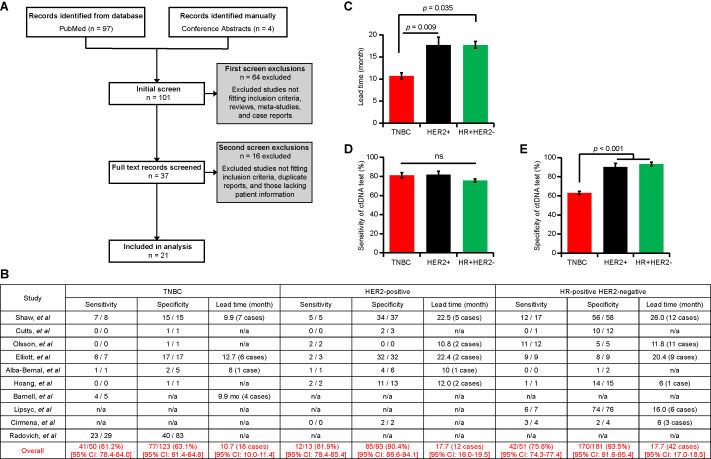
The annualized rate of breast cancer recurrence is 10.4% within the first five years after surgery, with the highest risk (15.2%) occurring during the first two years.1 Despite the integration of mammography, MRI, CT, and PET scans into follow-up protocols, recurrence remains the leading cause of breast cancer–related mortality, accounting for an estimated 42,250 deaths in the United States in 2024. Early detection of tumor recurrence is therefore critical to improving the prognosis of breast cancer patients by enabling timely and targeted therapies. Circulating tumor DNA (ctDNA), which originates from tumor cells and enters the bloodstream (Fig. S1), has emerged as a promising biomarker for real-time monitoring of tumor burden. ctDNA is typically double-stranded and shorter than 200 nucleotides. Notably, its half-life ranges from 16 min to 2.5 h, supporting its utility as a dynamic biomarker.2 Measuring ctDNA in blood samples has evolved into a non-invasive liquid biopsy approach capable of predicting tumor recurrence prior to clinical diagnosis. Here, we performed a meta-analysis to evaluate ctDNA as a biomarker for early-stage breast cancer recurrence, with the goal of supporting its integration into clinical decision-making.