PAK1 inhibition synergistically enhances the anti-tumor efficacy of PARP inhibitors in ovarian cancers
PAK1 inhibition synergistically enhances the anti-tumor efficacy of PARP inhibitors in ovarian cancers
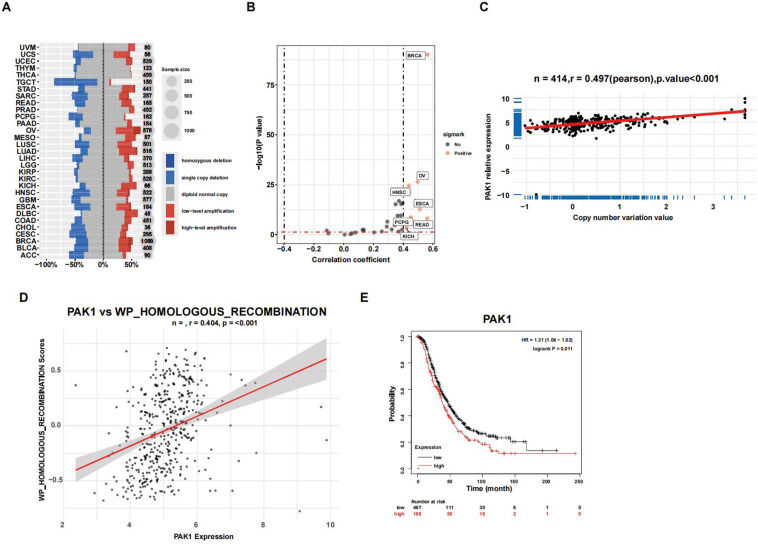
Poly (ADP-ribose) polymerase inhibitors (PARPi) demonstrate effective treatment outcomes in ovarian cancer patients with BRCA1/2 mutations or homologous recombination (HR) repair deficiencies, leveraging the principle of synthetic lethality. However, PARPi resistance and HR proficiency remain significant challenges in the clinical management of PARPi, necessitating the development of novel strategies for PARPi therapy in ovarian cancer. Our previous research identified PAK1's involvement in replication stress-induced cytotoxicity. Nonetheless, whether PAK1 also affects HR repair and PARPi sensitivity in ovarian cancer remains unresolved. In this research, we found that the expression of PAK1 correlated with an unfavorable prognosis in ovarian cancer. Depletion of PAK1, introduction of a kinase-dead mutation, or treatment with the inhibitor IPA-3 could reduce HR repair efficiency and increase ovarian cancer cell sensitivity to the PARP inhibitor olaparib. The combination of olaparib and IPA-3 synergistically increased olaparib-induced DNA replication stress and double-stranded breaks. Using cell line-derived xenograft, patient-derived organoid, and patient-derived xenograft models, we discovered that IPA-3 potentiated the therapeutic efficacy of olaparib both in vivo and ex vivo. Collectively, our findings suggest that targeting PAK1 might offer a new avenue for increasing the sensitivity of olaparib and improving the outcomes of ovarian cancer patients.