Optimizing anti-seizure medication selection for epilepsy in EAST/SeSAME syndrome: Insights from DrugBank and STRING databases
Optimizing anti-seizure medication selection for epilepsy in EAST/SeSAME syndrome: Insights from DrugBank and STRING databases
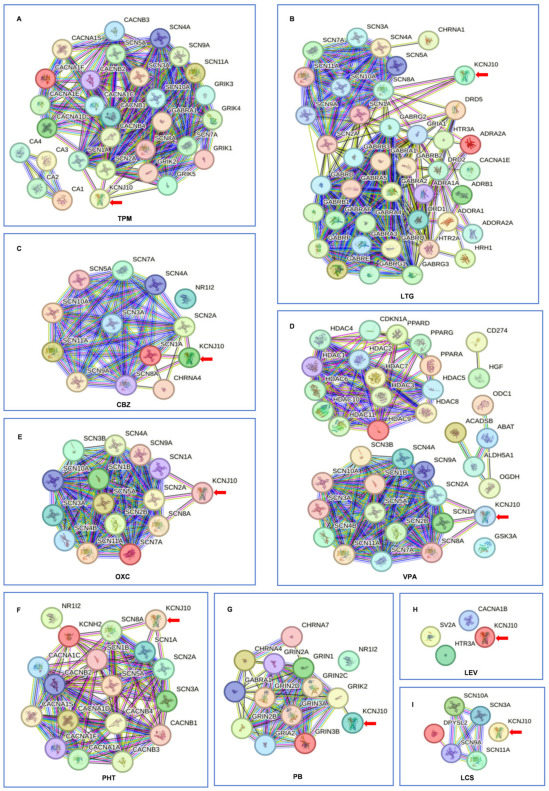
The potassium inwardly rectifying channel subfamily J member 10 (KCNJ10) gene encodes the Kir4.1 inwardly rectifying potassium channel, which is predominantly expressed in the central nervous system, inner ear, and kidneys. Loss-of-function mutations in KCNJ10 can result in EAST (epilepsy, ataxia, sensorineural deafness, tubulopathy) or SeSAME (seizures, sensorineural deafness, ataxia, mental retardation, and electrolyte imbalance) syndrome.1, 2, 3 The Kir4.1 channels are vital for the brain's functioning, particularly in the cortex, hippocampus, thalamus, and brainstem, where they play a crucial role in regulating astrocyte resting membrane potential, differentiation, and potassium balance. Disruption of these processes can significantly affect cognitive development, motor function, and seizure susceptibility.4 In EAST/SeSAME syndrome, seizures are often the earliest and most common symptom to appear in infancy. Broad-spectrum anti-seizure medications (ASMs), such as valproic acid, carbamazepine, oxcarbazepine, lamotrigine, and topiramate, have been shown to be effective.5 We present a unique case involving a child with EAST/SeSAME syndrome who has a homozygous missense mutation in KCNJ10 (c.523C > T, p.Arg175Trp), born to consanguineous parents. The child's seizures began at 48 days old and initially responded well to oxcarbazepine. After a subsequent relapse, topiramate was successful in controlling the seizures, while lacosamide not only failed to prevent another relapse but also aggravated the seizure activity. Considering that KCNJ10 loss-of-function mutations can compromise Kir4.1 channel activity, ASMs that target sodium channels are theoretically effective for epilepsy associated with this genetic anomaly, as seen in most documented cases. However, the seizure exacerbation observed with lacosamide treatment in this case prompts further investigation into the underlying mechanisms involved.