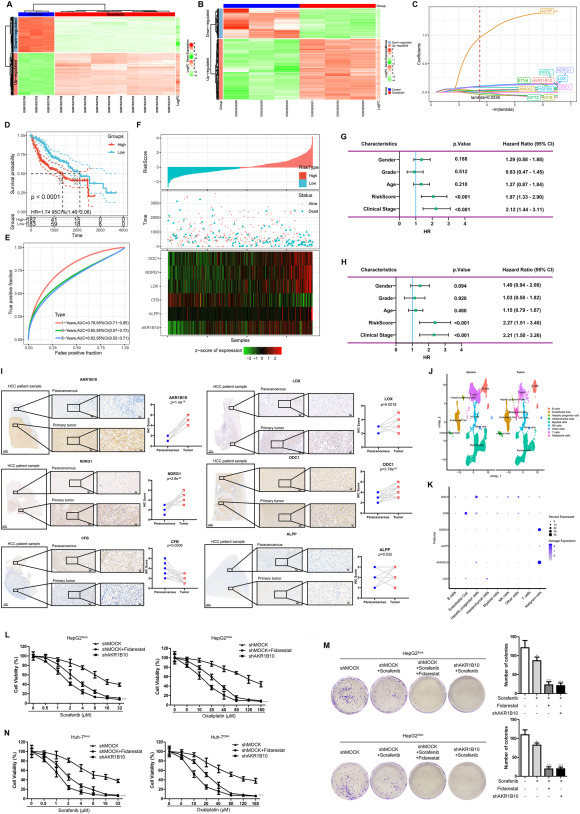
Identification of a novel prognostic gene signature associated with therapeutic resistance in hepatocellular carcinoma
Identification of a novel prognostic gene signature associated with therapeutic resistance in hepatocellular carcinoma
Hepatocellular carcinoma (HCC), globally the fourth-leading cause of cancer death, shows marked heterogeneity.1 In China, advanced HCC first-line therapies include sorafenib and oxaliplatin-based chemotherapy to improve overall survival, also used in conversion therapy for unresectable tumors.2,3 However, only 30% of patients respond, with most progressing within six months. Resistance causes adverse effects and significant financial burdens; non-personalized management worsens healthcare inefficiencies.4 Current prognostic systems [e.g., Barcelona Clinic Liver Cancer (BCLC) staging, TNM staging] fail to predict therapy responses or survival due to oversimplified criteria,5 urgently requiring biomarkers reflecting HCC's molecular complexity.