Pathogenic variants in GBX2 cause craniofacial microsomia
Pathogenic variants in GBX2 cause craniofacial microsomia
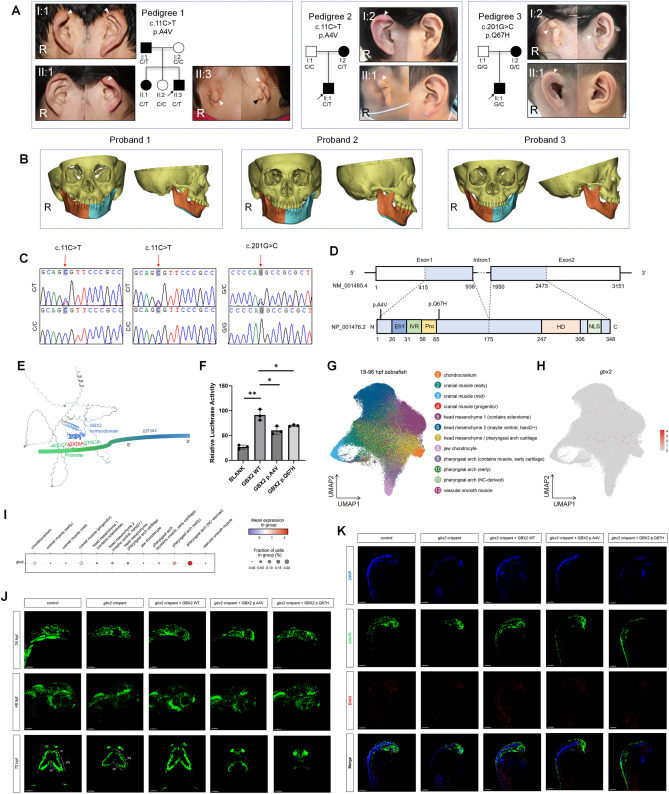
Craniofacial microsomia (CFM) is a congenital malformation resulting from abnormal development of cranial neural crest cells (CNCCs) and the first and second pharyngeal arches, affecting an estimated 1 in 3600 to 5600 live births. CFM encompasses a spectrum of abnormalities, ranging from isolated microtia to maxillary and mandibular hypoplasia, facial asymmetry, underdevelopment of the orbit, facial soft tissue, and/or facial nerve. The role of genetic factors in the occurrence of CFM is well-established. Although most cases of CFM are sporadic, both autosomal dominant and recessive inheritance patterns have been observed. Several genes, including SF3B2, HOXA2 and FOXI3, have been identified as pathogenic contributors to CFM.1 Haploinsufficiency of SF3B2 accounts for approximately 3% of sporadic CFM cases and about 25% of familial cases. To date, six families with microtia caused by HOXA2 variants have been reported. Additionally, approximately 3.1% of CFM cases are associated with pathogenic variants of FOXI3. Despite the identification of several causative genes, the genetic etiology of CFM remains unresolved for a significant proportion of cases.