Juvenile idiopathic arthritis-associated RIG-I S144F variant inhibits type I interferon signaling by blocking TRIM25-mediated ubiquitination
Juvenile idiopathic arthritis-associated RIG-I S144F variant inhibits type I interferon signaling by blocking TRIM25-mediated ubiquitination
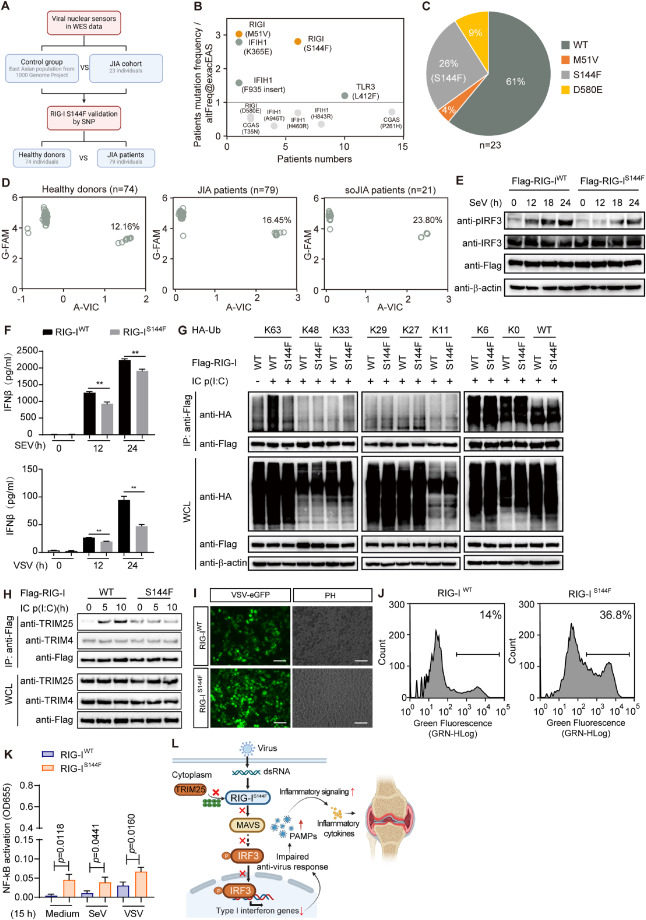
Juvenile idiopathic arthritis (JIA) is a heterogeneous group of idiopathic inflammatory arthritis affecting children before 16 years of age.1 Although the pathogenesis of JIA remains unclear, viral infection is a potential environmental risk factor in JIA development.2 The retinoic acid-inducible gene I (RIG-I), a key cytosolic pathogen recognition receptor (PRR) responsible for detecting viral double-stranded RNA (dsRNA), serves as a critical gatekeeper of antiviral immunity through type I interferon (IFN) induction.3 Recent study suggests that the S144F variant is associated with increased disease severity and poorer treatment outcomes in pediatric rheumatic patients.4 However, the potential contribution and mechanism of RIG-I genetic variants to JIA susceptibility has never been systematically explored. In this study, we show that the RIG-I S144F variant is significantly enriched in JIA patients. S144F variant reduces its binding with the E3 ligase TRIM25, leading to decreased K63-linked polyubiquitination of RIG-I. Consequently, this results in impaired type I interferon signaling activation, higher viral load, and aggravated NF-κB signaling. In summary, we uncover a critical role of the RIG-I S144F variant in suppressing antiviral immunity, and shed light on immune pathogenesis of JIA.